
Explain the anatomy you cannot point to.
Play the animation in the session, so your patient sees what is happening in their own body.
Then send them the video by text or email, so they remember what you talked about. At the end of each video, it shows your practice name, logo, phone number and booking link. That turns every video into a referral: friends with the same problem can book with you, and doctors and other health professionals see who to send their next patient to.
- Play the animation in the session.
- Send your patient the video by text or email.
- The video ends with your practice name and booking link: friends book with you, and doctors send you patients.
Each video you send can bring you a new patient. One new patient covers a whole year of Pelvic Lens. Cancel any time.
Show your patient what their bladder does when they slouch, strain or cough. Once they see it, you stop repeating the same explanation, and they follow the plan because they know why.


"It only happens when I cough." Show them why, and what stops it.
Already use an anatomy app?
An anatomy app shows your patient the names of the structures, standing still. It does not show what changes when they cough or squeeze their pelvic floor: the change that matters clinically, and that makes them trust your plan.
Drag the round handle in the picture to the left to watch the same pelvis when your patient coughs, first without a squeeze, then with one. Once they have watched it happen, they squeeze their pelvic floor before they cough because they understand why, not because you told them to.
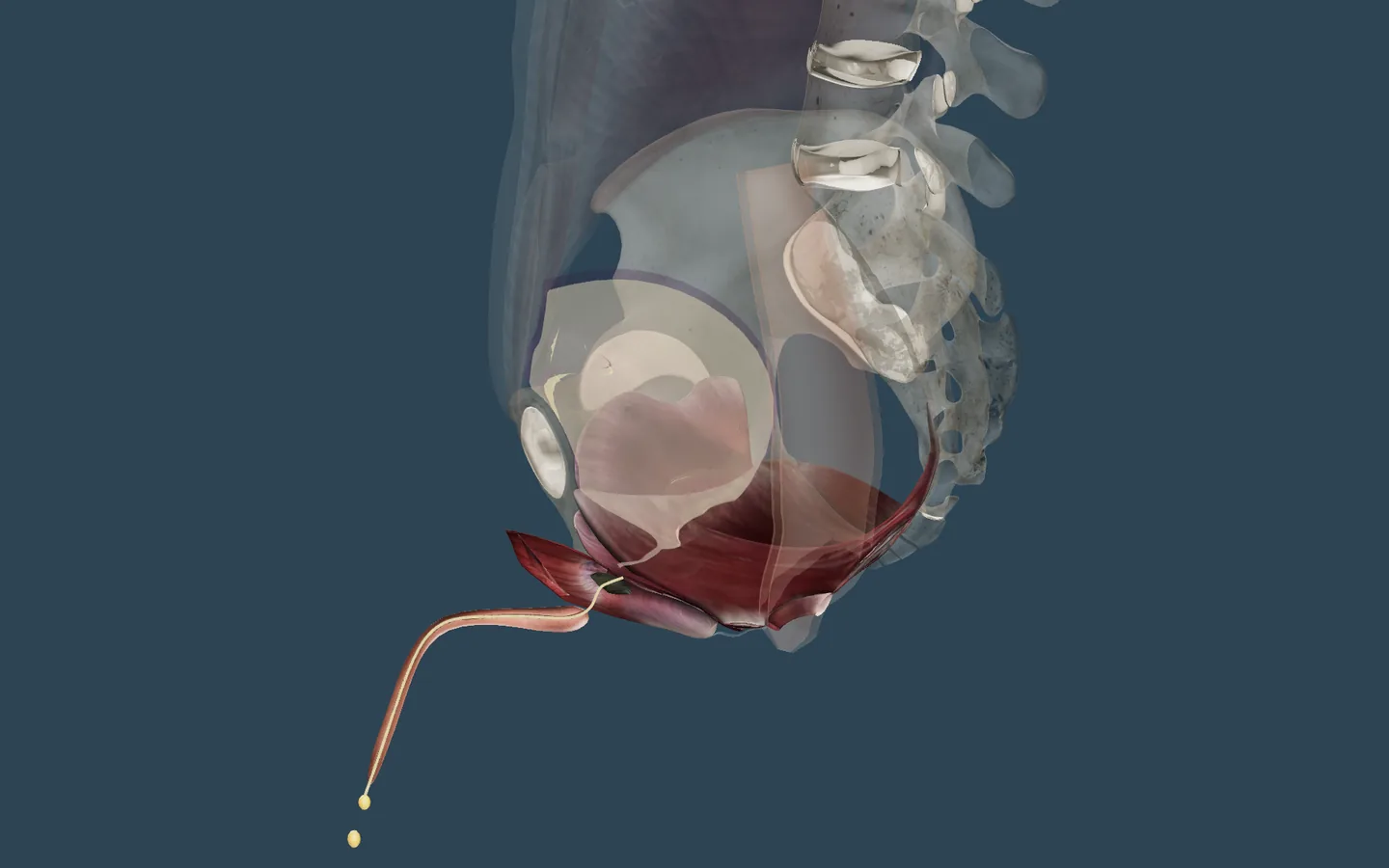
"I leak." "I can't wait." "It hurts."
You hear these every week. Open the model for your patient's complaint, play the animation and explain it as it moves.
Spinal referred pain to the testicle
"It's my testicle. Why are you looking at my back?" Show the pain referred from the thoracolumbar junction or the lumbar spine to the testicle, and the back exercise stops looking like the wrong treatment.
Stress incontinence after prostatectomy
"I do my exercises, so why am I still leaking?" Show the cough that leaks, then the same cough with a submaximal pre-contraction. He sees that timing, not strength, stops the leak, and keeps going.
Erectile function
"Will it ever come back?" Show cavernous nerve signalling, smooth-muscle relaxation, filling and veno-occlusion, then detumescence. He sees each step of an erection, so you can show which step his problem is in.
The PFM contraction he can't find
"I don't know if I'm doing it right." Show the lift with penile retraction, then full relaxation, so he can see what right looks like before he goes home and practises it.
Ejaculatory dysfunction
"Nothing comes out anymore." Show emission and expulsion, retrograde flow, and the dry orgasm after radical prostatectomy. He sees where the semen goes, and why there is none after the surgery.
Dyssynergic defecation
"I push and push and nothing happens." Show rectal filling, the rectoanal inhibitory reflex, and straining against a puborectalis that will not relax. He sees why pushing harder does not help.
Also in the library: dribble after peeing, the four ways of emptying, urgency, nerve pain and the whole male pelvis, layer by layer.
Leaking when she sneezes
"I leak when I sneeze." Show one cough-and-leak example, then pause to inspect urethral support, closure and pressure.
Pain that is not where it hurts
"It's my hip. Why are you asking about my pelvis?" Show the pain referred from the spine and the floor to the hip, the tailbone and the groin. The plan stops looking like the wrong treatment.
Prolapse under load
"Why does it feel different when I bear down?" Show abdominal effort and pelvic support moving together, then release the load. She sees why it feels different when she strains, and what her exercises are for.
The bladder that shouts early
"I can't wait." Show the bladder that signals too soon, then how a pause and a gentle pelvic floor squeeze let the urge ease, so the plan makes sense before she tries it.
Pain with intimacy
"It hurts." Show the floor that will not let go, the muscles that guard, then what changes when they relax.
The gap after birth
"My belly never went back." Show the wall under load and what closes the gap, so she stops bracing and starts breathing.
Included in your subscription: pelvic floor movement, prolapse, POP-Q and bowel coordination.
Seeing is believing you.

"That one is mine."
Your patient points at the one that is theirs. The next steps make sense.
Play the four ways of emptying and watch your patient point at one and say "that one is mine." They have recognised their own pattern before you have explained a thing. Guide them through the next steps for that pattern, and they follow because they have seen why.
When your patient recognises their own pattern, they follow the plan and keep their appointments: they come back better, and they come back to you.
Ever run out of cues?
"Stop the flow." "Hold in wind." "Lift your testicles." When he still bears down, show him the lift, then the full let-go. With 19 models for men, the one you need is ready before he sits down.
- Bladder and leaking: bladder pressure when he coughs or moves, the four ways of emptying, leaking after prostatectomy, dribble after peeing, and how drinking and bladder filling change his trips.
- Pelvic floor: the lift with penile retraction and testicular elevation, full relaxation, endurance, breathing for the pelvic floor, and normal variants.
- Pain: pain referred from the spine, local tissue pain, nerve pain and sensitisation, a pain map of dermatomes and nerves, and dry needling.
- Sexual health: erection, and ejaculation, including after radical prostatectomy.
- Bowels: rectal filling, and pushing against an outlet that will not relax.
- Anatomy: the whole male pelvis in nine layers, and the nine triangles.
"Stop the flow." "Pick up a marble." When she still bears down, show her the lift, the full let-go and the bear down. With 12 models for women, the one you need is ready before she sits down.
- Pelvic floor: squeeze, let go and bear down, and how breathing and pressure work with it.
- Leaking and urgency: the cough with and without a timed squeeze, and the bladder that signals too soon.
- Prolapse: prolapse under load, POP-Q by compartment and stage, and pessary support.
- Pain: pain referred to the hip, tailbone and groin, painful penetration, and dry needling.
- Bowels and the belly wall: bowel coordination, and the gap after birth.
What you do during and after the session
97% of patients understood better when they saw their own anatomy. But 75% of clinicians said it takes too long.
97% of patients understood better; 75% of clinicians said it takes too long. (Diao 2022) PMID 36454858
With Pelvic Lens the same understanding takes a minute. Between sessions, the video reminds your patient why the plan works, so they keep doing it, come back for the next session and get better results.
SubscribeDuring the session.
Turn the model to the structure, animate the movement you mean, and explain the important things to look at while your patient watches it happen.
After the session.
Send the video to your patient by text or email. From the same menu, email it to their doctor. The message is written for you.
At the next visit.
Play it again and ask your patient to walk you through it. Their own words tell you what stuck.
Every model, and videos that bring you more patient referrals
Early price for the first hundred clinicians. Cancel any time.
Patients who trust your plan, follow it and come back.
- Every model, and every new one as it ships, for male and female anatomy
- Patient videos with your practice name, logo, phone number and booking link
Monthly. Cancel any time. Your price holds while you stay subscribed.
My practice or clinic $59.99 a month for 3 clinicians. Each clinician after that is $14.99 a month, up to 9. Choose how many
Frequently asked questions from clinicians
Is this one more thing to learn?
No. Open the model for the complaint in front of you and press play. The animation does the showing while you talk. You add your logo and details once, and every video you send carries them.
I already use an anatomy app. What is different?
An anatomy app shows your patient where a structure sits, and they can look at that and still not understand why they leak. These models show the same structures working under pressure, breath and strain, so what your patient watches is the mechanism you have been describing.
Do you have female models?
They are included: prolapse, POP-Q animated, bowel coordination and pelvic floor movement. Choose Women above to see the previews, then open the models in your library.
I mostly treat women. Is it worth it for the men I see?
Yes, and especially then. When a man lands on your schedule, his model is ready: leaking after prostate surgery, pain, erections, ejaculation, bowels, and the squeeze the way men do it.
How long does it take in a session?
About a minute. Open the model for the complaint in front of you, animate it and talk over it. You explain what you would explain anyway, with something to point at.
Can I show this to a patient?
Yes. Show it on your screen in the session. Then send the video by text or email. It shows your practice name, logo, phone number and booking link. You can also send it to their doctor.
Does it replace biofeedback or an internal exam?
No. It shows what the muscle and the bladder do, not what your patient's own muscle is doing. Use it before you touch, alongside biofeedback, or when an internal exam is not an option.
Is Pelvic Lens only for IPC graduates?
No. Any licensed clinician can subscribe. If you have trained with Integrated Pelvic Care, you will recognise some of the terminology and the language.
What about my patients' data?
We collect nothing about your patients. The video page asks for no name or email. We count how often it is opened, never who opened it.
How do I cancel?
From Account, the button at the top of every page, at any time. Your access runs to the end of the month you have already paid for, and the refund and cancellation policy has the rest of the detail.
How does billing work for a clinic?
A practice pays one bill. $59.99 a month covers 3 clinicians. Each clinician after that is $14.99 a month, up to 9. Each clinician has their own login. For 10 or more, write to hello@pelviclens.com.
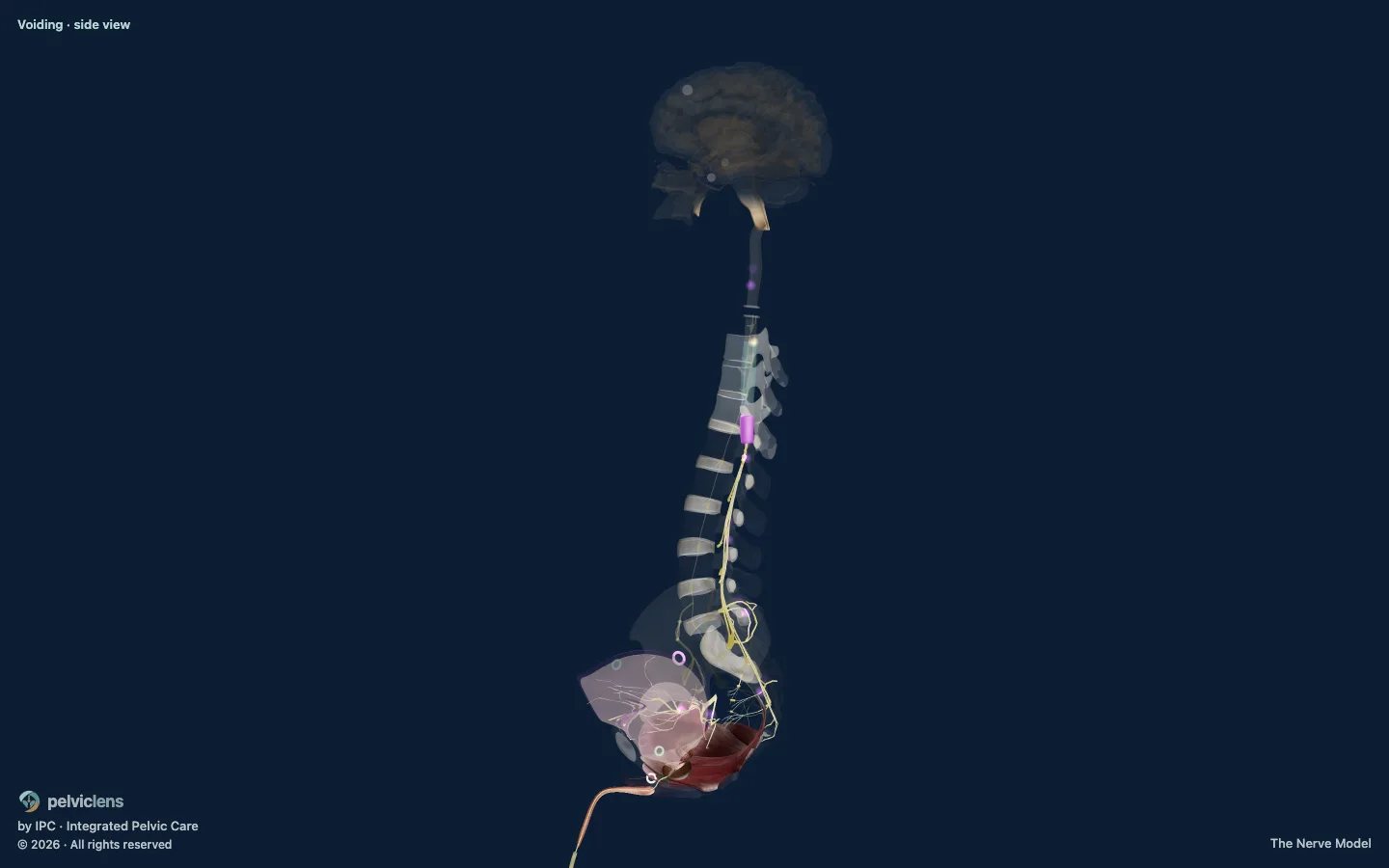
Explain it once. The video does the rest.
Explain it with the animation. Send them the video by text or email. Friends, doctors and other health professionals see your name and your booking link.
SubscribeEach video you send can bring you a new patient. One new patient covers a whole year of Pelvic Lens. Cancel any time.