
Pelvic floor downtraining in men
Hypertonic pelvic floor in men is a label, not a finding: pelvic floor downtraining is down-regulation for the Guarding pattern the exam finds.

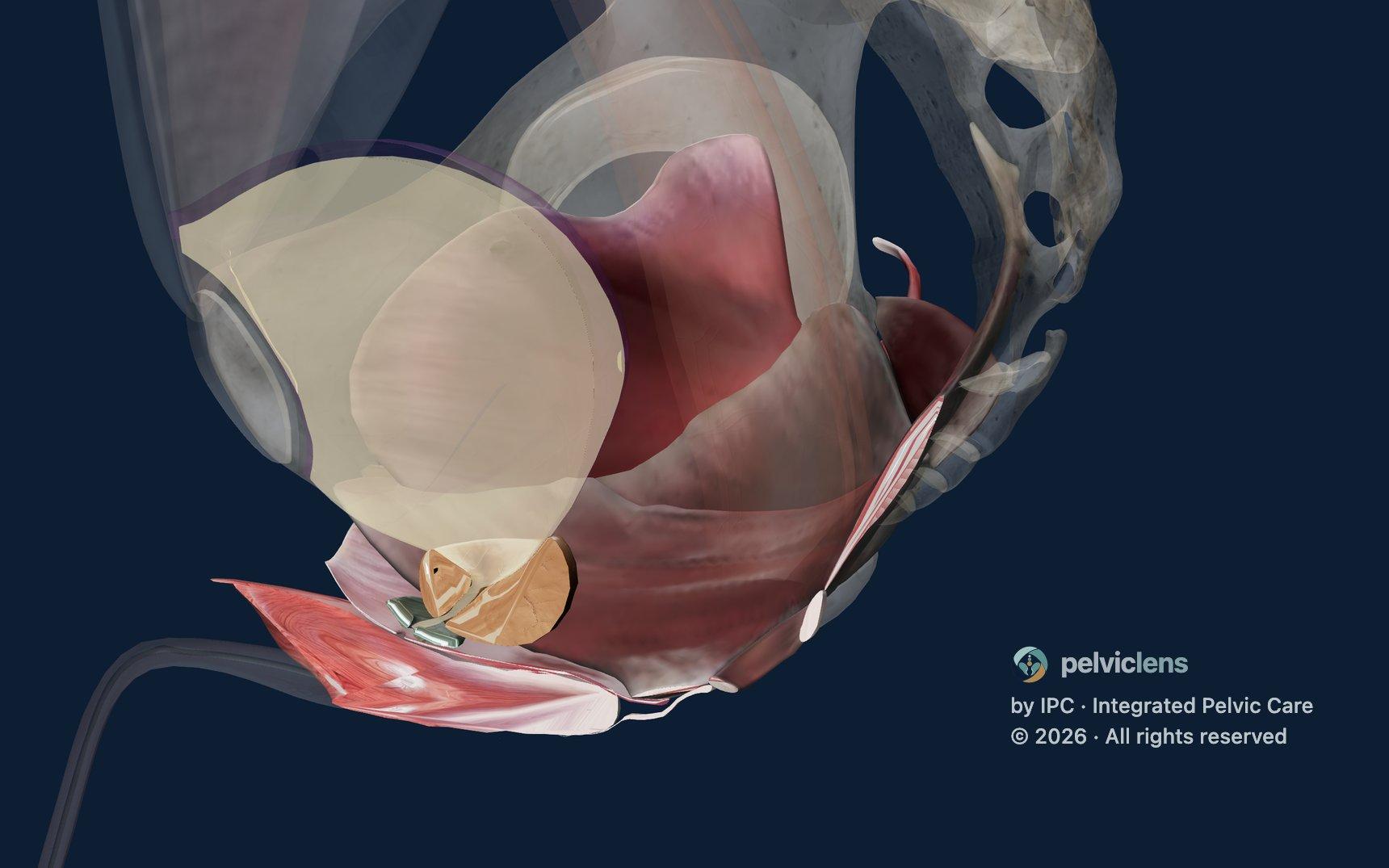
The short answer. Pelvic floor downtraining is down-regulation for a male pelvic floor in the Guarding pattern, a regulation deficit that cueing changes. It trains the floor to relax, grade its effort and return to baseline. Matched to that pattern, downtraining improves guarding and pain. A floor in the Restriction pattern cannot open, and its own treatment, mobility work, improves opening.
Key takeaways
- Hypertonic and overactive are labels, not findings: tone has an active and a passive part, and tone does not equal function.
- Cueing is the hinge between Guarding and Restriction. An elevated/indrawn resting perineum that improves with cueing points to Guarding and downtraining. One that is non-modifiable (Y sign) points to Restriction and mobility work.
- Treat first the pattern that best explains the main symptom. Pain often starts with guarding or myofascial sensitivity, leakage with underactivation or timing. Downtraining is the wrong first move for Underactivation A and B.
Two referrals for pelvic floor downtraining reach your clinic in the same week, both with the same line: hypertonic pelvic floor, please downtrain. The first patient has pelvic pain, and his floor rises before your finger reaches the perineum, then settles as he breathes. The second, months after his prostatectomy, has a floor that will not descend on bearing down however you cue it. His leak has not improved on the Kegel program from the ward. The word on the referral fits both of them, and the treatment it asks for fits only the first.
Downtraining is down-regulation, not a push down
"Down" sounds like a direction, and in downtraining it names a skill. A healthy floor has a resting center. It lifts above that center on a contraction, lengthens below it under load, and comes back every time. Relaxation is the center, not the bottom of the range.
Down-regulation is what downtraining trains. It brings the floor back to its center after any effort, with no push and no hold. That is the regulation capacity, and the Guarding pattern has lost it: the floor contracts when nothing asks it to and is slow to let go. Mobility is a different capacity. The floor opens, lengthens and descends below its center under a gentle load, as at the start of a bowel movement, and returns. The Restriction pattern has lost it, and mobility work, a treatment of its own, restores it. Integrated Pelvic Care's masterclass, the teaching Pelvic Lens is built on, matches each treatment to its response: "down-training improves guarding/pain; mobility improves opening".
Mobility matters for continence as well as for opening. A cough is a high-speed coordination task, not the whole floor lifting. As the pressure rises, the levator ani lengthens and descends, and at the same time the striated urethral sphincter shortens to support closure. After radical prostatectomy the striated sphincter carries the closure alone, the mechanism of intrinsic sphincter deficiency.
Breath serves both treatments. In ten healthy men on transperineal ultrasound, the pelvic floor moved with the ribcage as they breathed. In most of them, though not all, the urethrovesical junction descended on inspiration and rose on expiration [1]. The inhale trains the opening, and an easy breath brings a Guarding floor back to its center.
Guarding or Restriction: what cueing changes
Both floors can sit high, and both can fail to descend, yet one cue tells them apart. The masterclass writes the major criteria of the two patterns this way (PFM is pelvic floor muscle):
| Pattern | Major criterion, as the masterclass writes it |
|---|---|
| Restriction pattern | "Markedly reduced passive mobility / poor tissue glide that persists despite relaxation, breathing, or cueing" |
| Restriction pattern | "Absent or clearly limited PFM/perineal descent or opening during bearing down when relaxation is expected, without evidence of active protective contraction" |
| Guarding pattern | "Persistent or recurrent involuntary PFM contraction, anal closure, or perineal retraction when contraction is not required" |
| Guarding pattern | "Protective involuntary contraction/withdrawal triggered by contact, palpation, insertion, movement, or pressure" |
| Guarding pattern | "Paradoxical contraction/elevation when relaxation or descent is functionally required" |
Paradoxical contraction on bearing down is what the literature calls pelvic floor dyssynergia, a pelvic floor muscle contraction when relaxation is functionally required [2]. The minor criteria split two findings by whether cueing changes them:
| Finding | Restriction pattern: cueing does not change it | Guarding pattern: cueing changes it |
|---|---|---|
| Resting perineum | "Elevated/indrawn resting perineum that is non-modifiable (Y sign)" | "Elevated/indrawn resting perineum that improves with cueing" |
| Puborectalis | "Acute/restricted puborectalis or anorectal position that is non-modifiable" | "Acute puborectalis position that is modifiable" |
The anorectal angle is read with the same split, because the puborectalis helps set that bend. If the floor moves further once your patient is cued to relax, the limit is regulation. If it stays put whatever the cue, the limit is mobility. So the first patient's floor has a regulation deficit, and the second patient's a mobility deficit, though it can often still lift a little.
Irritability is the second tell. A Restriction pattern on its own tolerates mobilization with at most mild soreness for 24 to 48 hours, and keeps improving. When it flares, Guarding or another problem is usually underneath. A Guarding floor protects itself, and its flares can last four or five days or a week.
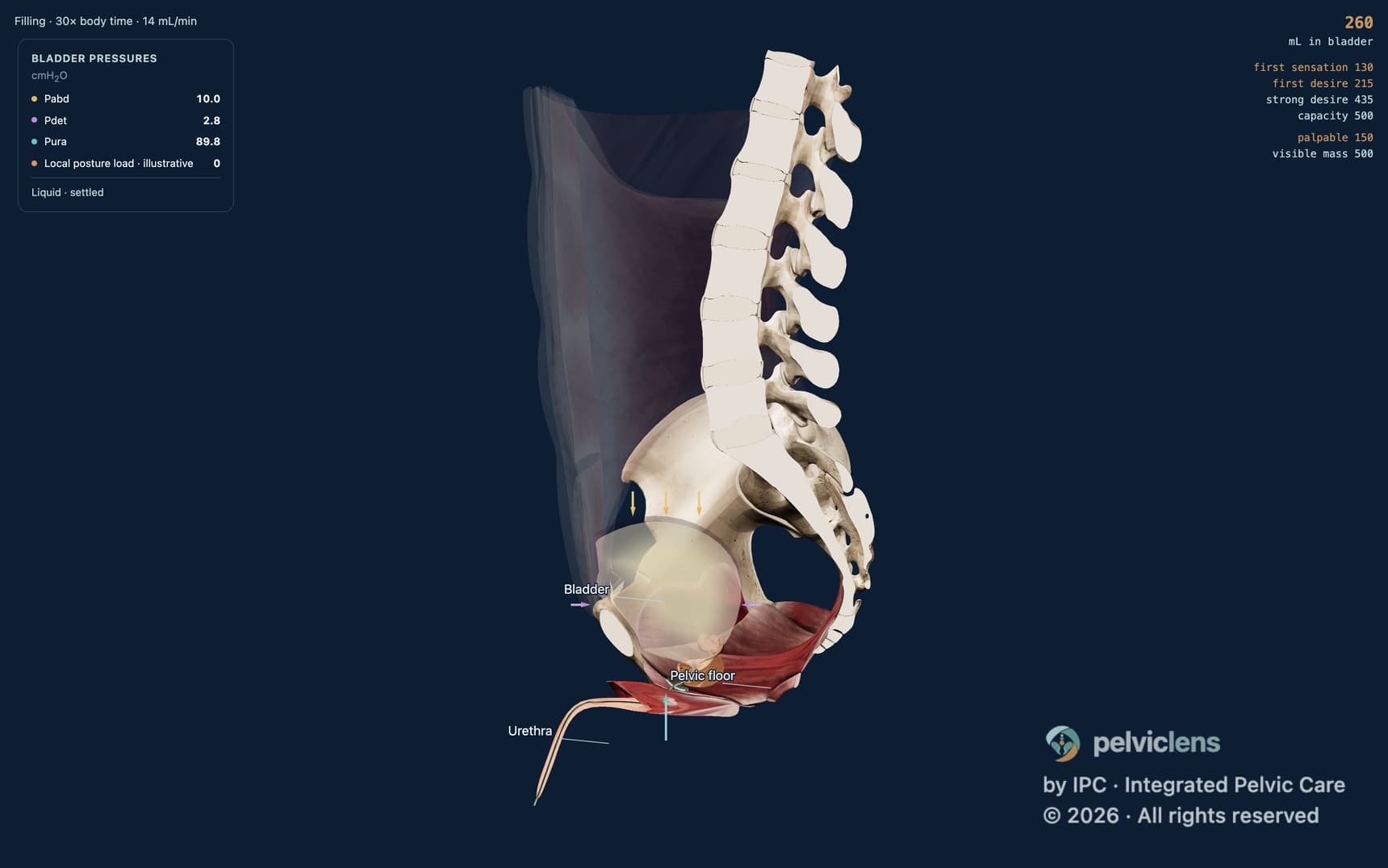
Your second patient is sure his floor is too weak, and that more Kegels will stop the leak. On the Pelvic Lens pelvic floor model, both floors bear down while the comfort cue is given.
Why hypertonic and overactive pelvic floor are wrong labels
The referral says hypertonic or overactive, and either word has already chosen the treatment. As the terms are searched, a hypertonic pelvic floor is one too tight to relax, and an overactive pelvic floor is one that contracts when the task asks it to let go. Both describe the same non-relaxing pelvic floor. The masterclass answers the label plainly: "The traditional hypotonic / hypertonic classification is terminology-problematic, and clinically insufficient for male pelvic floor rehabilitation". Of the seven reasons it gives, three decide the treatment: tone is not one thing, tone does not equal function, and the label creates the wrong treatment shortcut.
Online, a hypertonic floor gets downtraining, a hypotonic floor gets Kegels, and the Kegel and the reverse Kegel become the only two treatments anyone names. Two labels cannot stand in for five capacities, and a floor can hurt with no rise in tone at all. So the word hypertonic is dropped, unless your patient has a neurological condition.
The literature shares that caution. The International Continence Society (ICS) report on pelvic floor muscle assessment set 185 definitions and descriptors for the male and female pelvic floor [2]. It reserves hypertonicity for a patient with a neurological disorder; in a patient without one, the term is increased pelvic floor muscle tone [2]. It gives tone two components, active contractile and passive viscoelastic, which digital palpation cannot tell apart [2]. A systematic review of 151 studies found few that convincingly showed increased tone. Only about a quarter had a healthy control group, and nearly all used unvalidated methods or applied them in a way that ruled out a convincing reading [3]. Terminology was often inaccurate, and few studies included men [3].
The IPC Male Pelvic Floor Patterns, in assessment order
A pattern tells you which treatment your patient needs before you write the first exercise. The masterclass defines the IPC Male Pelvic Floor Patterns as "clinical groupings of physical examination findings that reflect the primary pelvic floor capacity affected". There are six, each named with its capacity, and each points the work in its own direction:
| Pattern | Capacity | Direction of the work |
|---|---|---|
| Restriction pattern | Mobility deficit | Down: restore mobility |
| Underactivation A | Voluntary recruitment deficit | Up: restore voluntary activation |
| Underactivation B | Involuntary/reflexive timing deficit | Up: restore automatic timing |
| Guarding pattern | Regulation deficit | Center: restore regulation |
| Myofascial pain pattern | Tolerance deficit | Up, down or center: restore tolerance |
| Normal pattern | No deficit | No downtraining |
The order matters. It reflects the clinical assessment sequence, from observation to external assessment to internal examination, and it starts with Restriction, as a joint exam starts with range. A Normal pattern requires ruling out the other patterns first. The structures those findings are read on are set out in the male pelvic floor anatomy pillar.
The Pattern Classification Rule keeps the exam proportionate. A pattern is suggested by 1 major criterion or 3 minor criteria, and it becomes clinically meaningful only when it connects to symptoms and impaired capacities. A Y sign with no perineal descent on bearing down, and no protective contraction, already meets a Restriction major criterion before any internal exam. The criteria were written and taught for the male pelvic floor.
Several patterns can coexist in your patient, and his anterior and posterior floor may show different ones at the same time. A pattern may be generalized or localized, for example to a scar, one side or a superficial muscle group, and the same pattern can carry different clinical significance depending on his symptoms. The key is symptom-pattern matching: "a pattern becomes clinically meaningful when it helps explain the patient's presentation". The masterclass's proposed definition of male pelvic floor dysfunction applies the same test: a clinically relevant impairment in one or more capacities (mobility, recruitment, timing, regulation or tolerance) that contributes to, explains or perpetuates a man's symptoms.
No single gold-standard test diagnoses pelvic floor dysfunction. Findings do not map one-to-one with symptoms, and the exam is subjective and examiner-dependent. Reliability and validity evidence in men is limited. A validated classification is still lacking, though the terminology is standardized [2]. On an unblinded exam of 11 sites, among them the prostate and the pelvic floor, half of 384 men with chronic prostatitis/chronic pelvic pain syndrome (CP/CPPS) were tender somewhere [4]. Seven percent of 121 men with no symptoms were tender too [4]. On transperineal ultrasound in men, two assessors agreed closely on the floor's resting position, but not on its up-and-down movement [5]. The patterns are a clinical classification, not a validated instrument, so a letter to a urologist describes the findings in ICS terms.
Down-regulation for the Guarding pattern
Downtraining a Guarding pattern does not aim lower; it aims for a floor that comes back to its center. In down-regulation, the priority is to reduce unnecessary holding, and the goal is to restore regulation: contract, relax and return to baseline, with graded effort. Your patient practices a light contraction and its release, then a medium one, until switching on and off are both his choice. Every exercise ends at the center.
The home program is frequent and effortless. In the pelvic floor check-in, your patient scans his floor every hour and lets it come back to the center. Non-effort pelvic floor relaxation has no push and no bearing down. Pre-void relaxation settles the floor before he voids or opens his bowels, when guarding gets in the way of opening. Irritability in this pattern is moderate to high, so practice is more frequent, with fewer repetitions and less internal work at first.
Manual therapy for this pattern stays gentle and unhurried: gentle external or internal contact for pelvic floor down-regulation, manual cueing for complete relaxation after contraction, and breath-assisted relaxation with tactile feedback. Your finger rests at the perineum and waits until the involuntary contraction decreases, then moves a little and waits again. The devices serve regulation too: EMG, ultrasound or pressure biofeedback, rectal balloon-assisted relaxation and vibration-assisted sensory down-regulation.
In 42 men with CP/CPPS and 48 without pelvic pain, the men with pain had more resting pelvic floor muscle activity between voluntary contractions than at plain rest. The men without pain came back to the same baseline [6]. The study measured what two Guarding minor criteria describe: "Partial relaxation after contraction" and "Loss of relaxation between repetitions".
Relaxation-led care has support in men. In 138 men with CP/CPPS that earlier treatment had not helped, myofascial trigger point release with paradoxical relaxation training left 72 percent moderately or markedly improved [7]. It was an uncontrolled case series, so it supports the direction of the work without showing which pattern each man had.
Mobility work for the Restriction pattern
Here the floor has to reach a range it has lost. This is mobility work, linked to downtraining but not downtraining. The goal is to restore mobility, the priority is lengthening, descent, excursion and opening, and the direction is down.
The pelvic floor drop is the first step: the return to the center without effort, so your patient learns where his baseline is. The opening below the center is the inhale-associated pelvic floor descent. On an inhale he lets the floor open and lengthen under a gentle load, as if starting a bowel movement, and on the exhale it returns. What the internet calls a pelvic floor drop, or a reverse Kegel, is this descent, not the drop above. The lift-drop-descent sequence then trains the range: a lift, back to neutral, a small push into descent, and back to neutral. When the opening fails on the toilet itself, the dyssynergic defecation article takes over.
Mobility is trained in held positions such as happy baby pelvic floor opening, supported squat opening and child's pose pelvic floor opening, because movement keeps the floor from descending. The dose is the mobility dose you would give a stiff joint: a gentle hold of three to six seconds, ten to fifteen repetitions or breaths per set, three to four short sessions a day.
Manual therapy for this pattern is mobilization and lengthening taken to the limit of the available mobility. Work inside the range does not restore it. The techniques include internal levator ani lengthening, internal anterior pelvic floor mobilization, perineal body mobilization, internal coccyx mobilization and scar mobilization. When the external anal sphincter starts to grip, the technique has gone too far and will trigger guarding. A dilator here is a little bigger than the canal, and a rectal balloon suits a floor that will not descend.
Manual physical therapy in men has guideline support. For men with pelvic floor or abdominopelvic muscle myalgia, the 2025 AUA guideline on male chronic pelvic pain states that clinicians may offer individualized manual physical therapy techniques, such as myofascial release of the affected tissues internally and externally [8]. That is a Conditional Recommendation on Grade C evidence [8].
Do reverse Kegels actually work?
Reverse Kegels work for the one pattern that has to descend, and they are the wrong first move for the others. A reverse Kegel is a deliberate lengthening of the pelvic floor, the opposite of a Kegel's lift. For the Restriction pattern it is the right direction, taught once your patient can find his center.
For the Guarding pattern the push is the wrong cue. For Underactivation A and B the direction is up: recruitment comes first, then timing in function. "Bearing down instead of lifting" is already a minor criterion of Underactivation A. For the Myofascial pain pattern the goal is tolerance: the work may reproduce the familiar pain, and your patient is no worse afterwards. An obturator internus trigger point, better charted as a tender point, is read and treated this way.
When patterns coexist, the order matters
When two patterns share one floor, treat first the pattern that best explains the main symptom. Pain often starts with guarding or myofascial sensitivity, and leakage with underactivation or timing. In complex or flare-prone cases, guarding comes first, then myofascial pain, mobility, activation and timing. A floor with Underactivation B contracts on request but responds late to the cough, when the external urethral sphincter has to close by reflex. Restriction and Guarding can make a floor look weak, and mobility and regulation come before strengthening. So a leak after prostatectomy, like the second patient's, may not improve on Kegels alone. A long history of prostatitis can bring Guarding and Myofascial pain together, and the chronic pelvic pain syndrome in men article sorts that presentation by the Four Horsemen first.
Four questions come before any pelvic floor rehabilitation: whether the pelvic floor is relevant, whether the symptom matches a failed pelvic floor capacity, whether the pattern is clinically meaningful, and whether a precaution changes the starting point. Groin pain after an inguinal hernia repair, upper back pain, or pain that radiates into the floor from a nerve outside it may not involve the pelvic floor at all. Pain referred to the groin or testicle from the thoracolumbar junction, as in Maigne syndrome, starts at the spine. Pain in the pudendal nerve's territory raises the same question, which the pudendal neuralgia article answers with its criteria and re-tests. So does pain at the tailbone, which the coccydynia article sorts with sitting and standing films before the floor is treated.
Where the complaint is urinary, an intermittent stream can come from sphincters and a pelvic floor that do not relax during voiding, or from an underactive or acontractile detrusor [9]. The pressure-flow study after a cystometrogram tells them apart. A high detrusor pressure behind a slow flow means bladder outlet obstruction, and the ICS lists pelvic floor overactivity among its functional causes [9]. A low pressure or a short contraction means detrusor underactivity [9]. Recent surgery, a catheter, radiation and a lack of consent each change where the work starts.
Where the clinical relevance is uncertain, use a short trial of pelvic floor rehabilitation, aimed at one pattern for ten to fifteen minutes. Track a meaningful symptom before and after. Mild soreness within 24 to 48 hours is acceptable. If the pattern is relevant, some improvement appears within four or five days. Worsening that persists means reassessing.
The notes carry the pattern too. "Down-regulation" says a Guarding pattern was treated, and "mobilization", "lengthening" and "opening" say a Restriction pattern was; "internal work" tells the next therapist nothing.
What to say to your patient
- With the model's two floors bearing down, before you name his pattern: "Watch the line. This floor sinks below it once it feels safe. That one stays up."
- After the exam finds a Guarding pattern: "Your pelvic floor holds on to protect you. We will teach it to let go."
- After the exam finds a Restriction pattern, when he asks about Kegels: "Your pelvic floor is stiff, so more squeezing will not help yet. First we help it open and lengthen."
- At the end of a short trial session: "Notice how you feel tomorrow and over the next few days. Then tell me."
Frequently asked questions
How to down train the pelvic floor?
Downtraining the pelvic floor is down-regulation for a Guarding pattern: easy returns to the resting center, gentle contract-relax resets, an hourly pelvic floor check-in and pre-void relaxation, relaxing before voiding, with no pushing. Matched to that pattern, it improves guarding and pain. A floor in the Restriction pattern cannot open and gets mobility work instead, such as the inhale-associated pelvic floor descent and the supported squat opening.
What are the first signs of hypertonic pelvic floor?
In men, the first signs are usually urinary, bowel or pain symptoms from a floor that will not open or will not let go. They include a slow start to the stream, a stream that stops and starts, incomplete emptying, a dribble after voiding, straining at stool and pain on sitting. They point to a capacity to examine, not a diagnosis, and the exam decides the pattern.
Should your pelvic floor be relaxed all the time?
No. In Integrated Pelvic Care's teaching, a normal male floor shows "appropriate resting tone, voluntary contraction, relaxation after contraction, lengthening/descent when expected, reflexive/automatic response to pressure, coordination with breathing and task demand, and absence of clinically relevant tenderness or pain reproduction". Relaxation is the resting center the floor returns to between those tasks, not a state it holds through them.
How do men perform a reverse Kegel?
A reverse Kegel is what the masterclass calls the inhale-associated pelvic floor descent. Your patient first finds his resting center without effort. On a slow inhale he lets the perineum open and lengthen downward, as if gently starting a bowel movement, and on the exhale it returns to the center. It is mobility work for the Restriction pattern, not downtraining. In a Guarding pattern, the push is the wrong cue.
Is an overactive pelvic floor the same as a hypertonic one?
On a referral, usually yes: both words describe a pelvic floor that does not relax on demand, and neither says why. The ICS keeps hypertonicity for a patient with a neurological disorder; without one, the term is increased pelvic floor muscle tone. The exam then names the capacity. A floor that will not let go but changes with cueing points to the Guarding pattern, and one that cannot descend, whatever the cue, points to the Restriction pattern.
References
- Pelvic floor muscle length changes with breathing in males: A preliminary report. Respiratory Physiology & Neurobiology, 2023.
- An International Continence Society (ICS) report on the terminology for pelvic floor muscle assessment. Neurourology and Urodynamics, 2021.
- Evidence for increased tone or overactivity of pelvic floor muscles in pelvic health conditions: a systematic review. American Journal of Obstetrics and Gynecology, 2023.
- Muscle tenderness in men with chronic prostatitis/chronic pelvic pain syndrome: the chronic prostatitis cohort study. The Journal of Urology, 2008.
- The repeatability of measurements of male pelvic floor anatomy and function made from transperineal ultrasound images of healthy men and those before and after prostatectomy. Neurourology and Urodynamics, 2021.
- Impaired Ability to Relax Pelvic Floor Muscles in Men With Chronic Prostatitis/Chronic Pelvic Pain Syndrome. Physical Therapy, 2022.
- Integration of myofascial trigger point release and paradoxical relaxation training treatment of chronic pelvic pain in men. The Journal of Urology, 2005.
- Male Chronic Pelvic Pain: AUA Guideline: Part II Treatment of Chronic Prostatitis/Chronic Pelvic Pain Syndrome. The Journal of Urology, 2025.
- The International Continence Society (ICS) report on the terminology for adult male lower urinary tract and pelvic floor symptoms and dysfunction. Neurourology and Urodynamics, 2019.
Articles on this topic
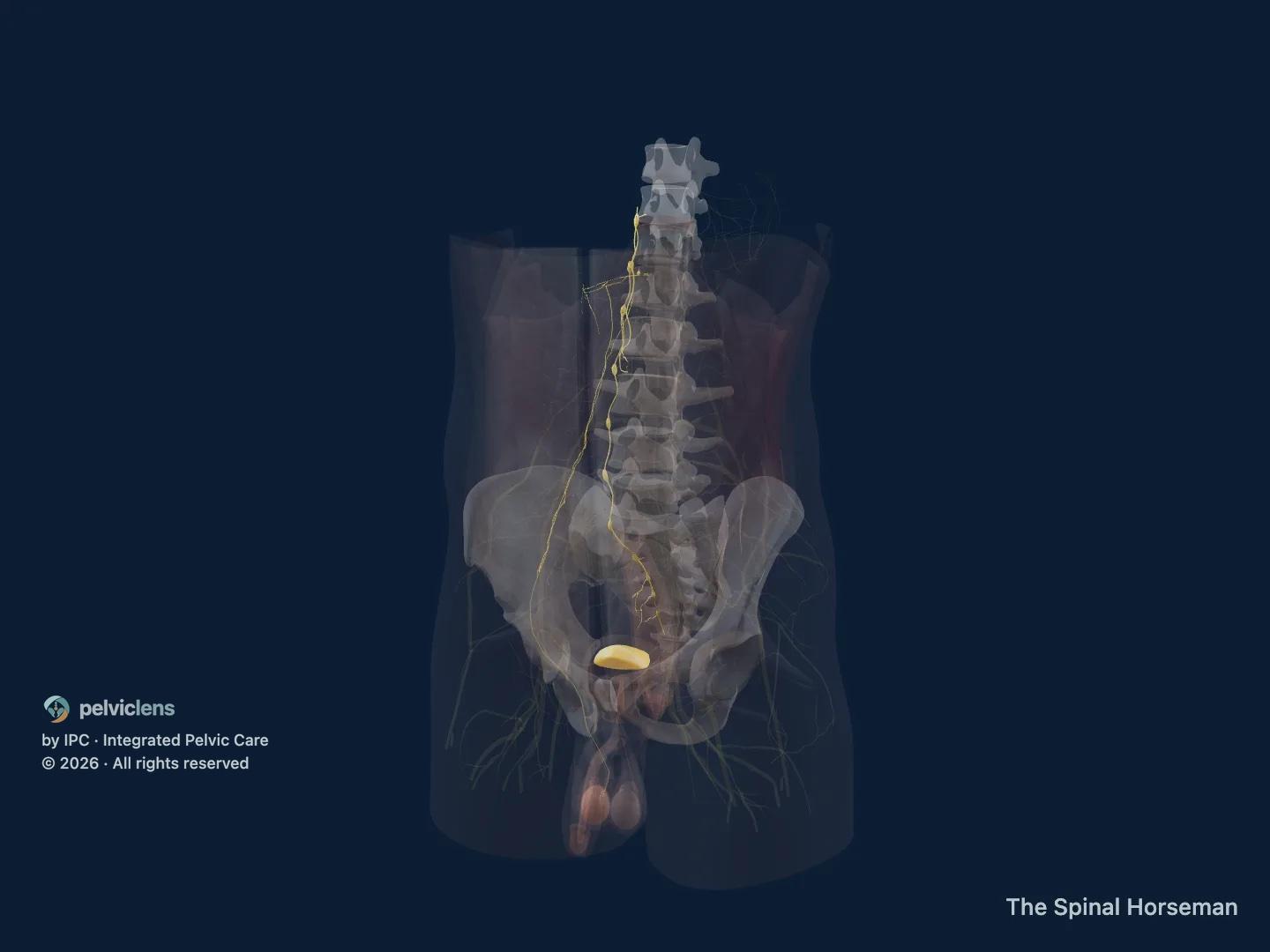 Coccydynia: causes, tests and treatmentCoccydynia for clinicians: dynamic sitting X-rays, the pelvic floor muscles on the coccyx, and the evidence from cushions to coccygectomy.10 min read
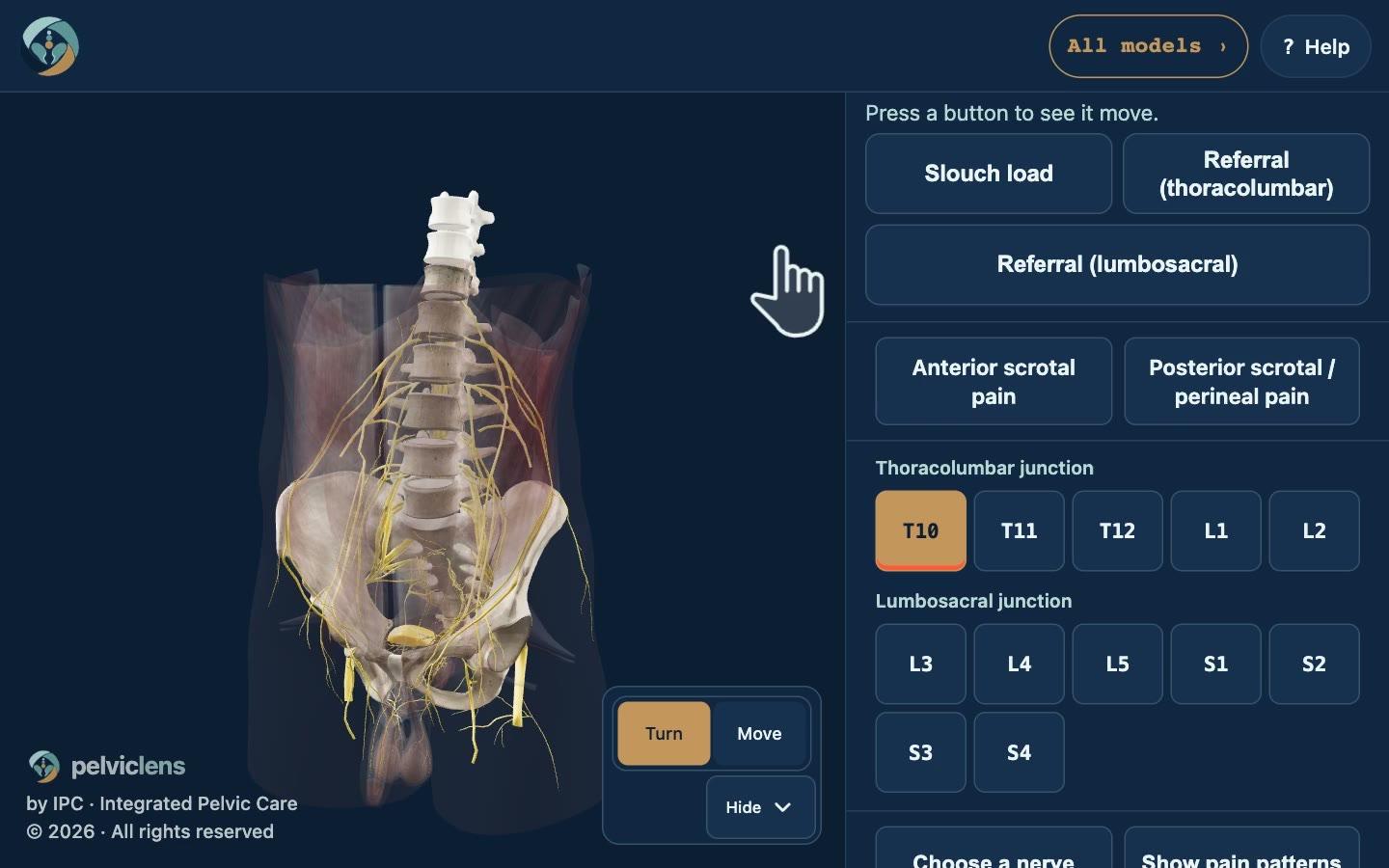 Maigne syndrome: referred pelvic painMaigne syndrome refers T12-L1 pain to the groin, testicle or labia. Test the junction with Maigne's signs and repeated spinal loading.10 min read
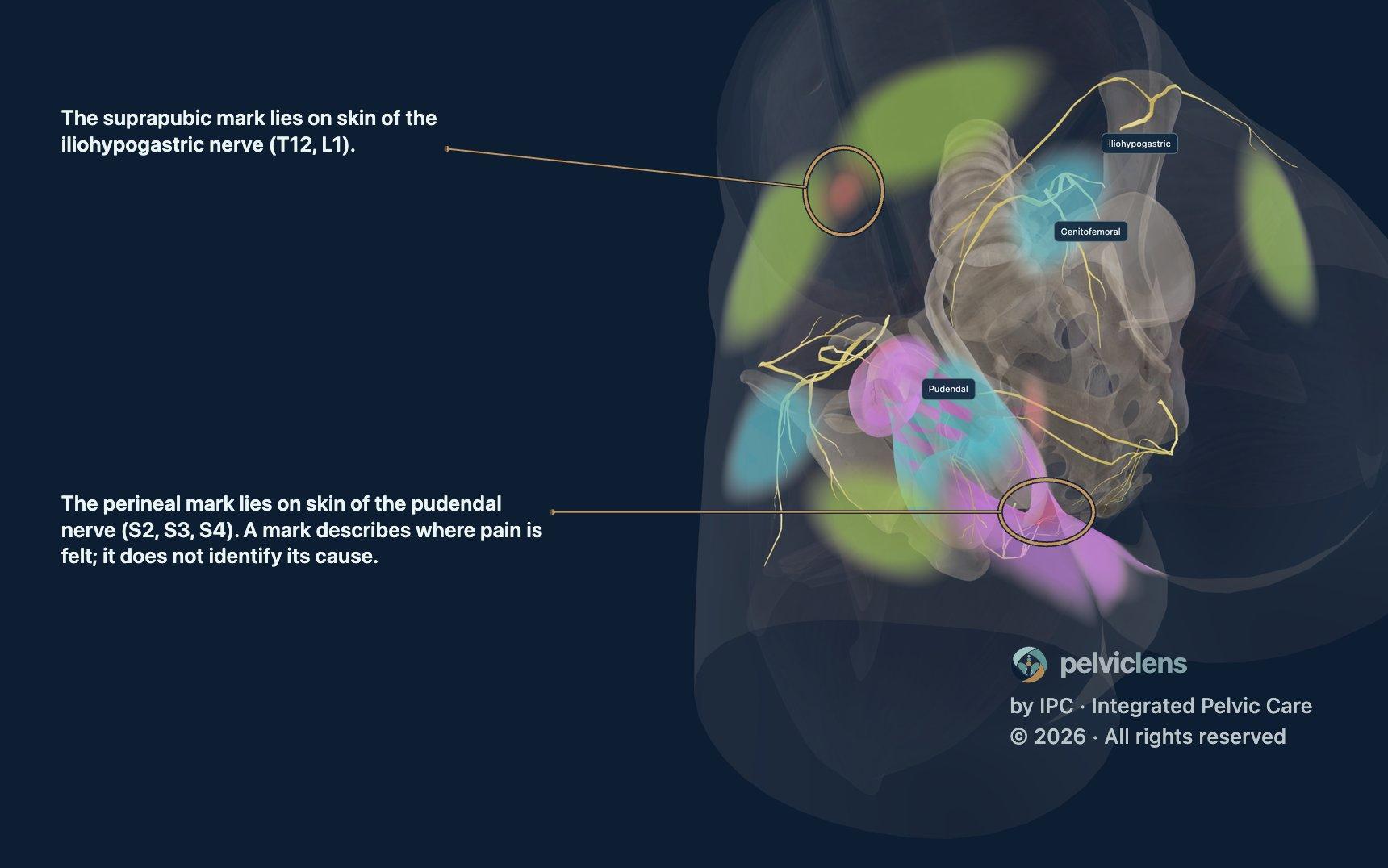 Men’s healthChronic pelvic pain syndrome in menChronic pelvic pain syndrome in men, long called chronic prostatitis: sort it by the Four Horsemen, then by the pelvic floor pattern.10 min read
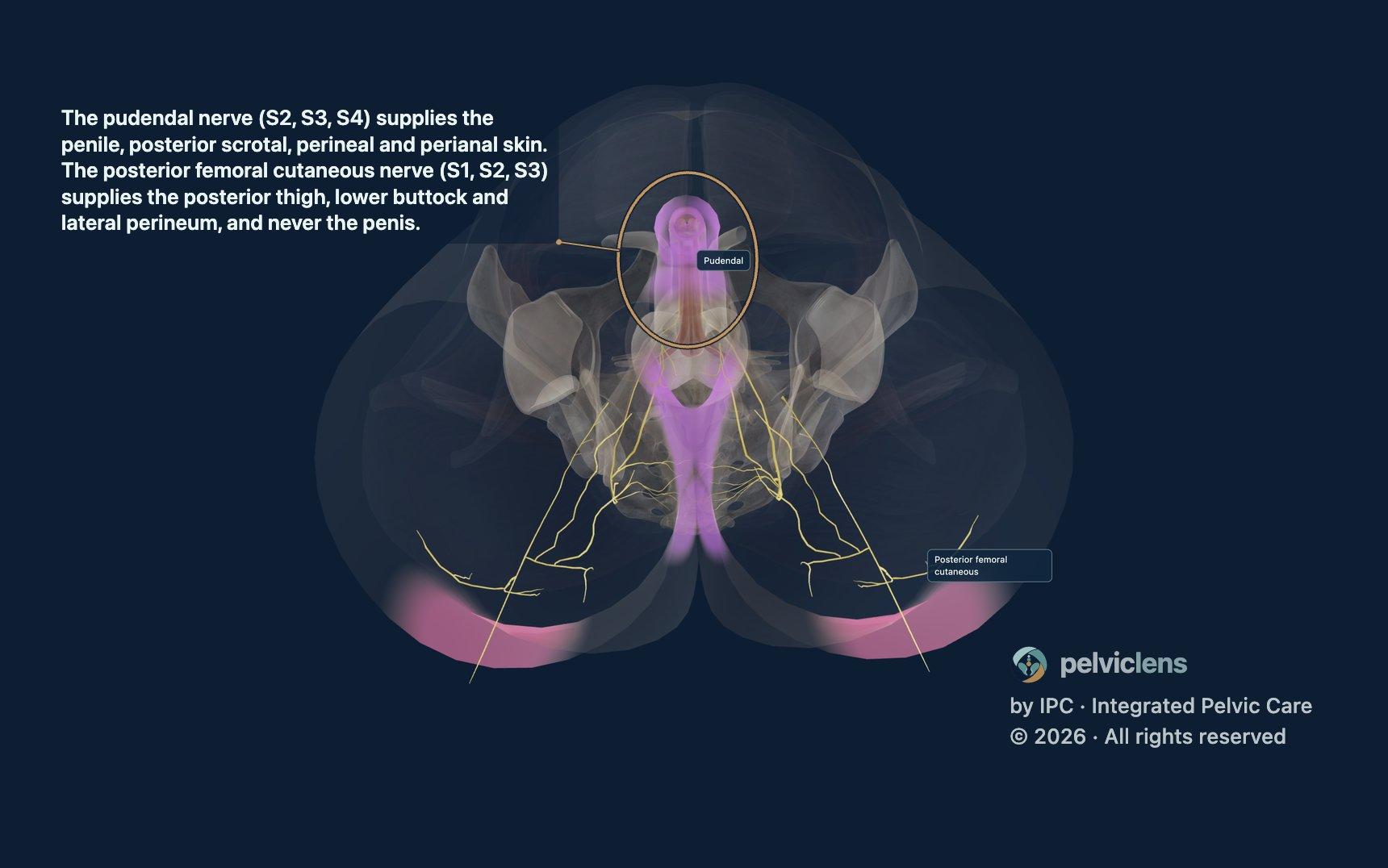 Men’s healthPudendal neuralgia: criteria and testsPudendal neuralgia in men: the Nantes criteria, the P slump test and the pudendal nerve tests, from EMG to the CT-guided block, read by Four Horsemen.10 min read
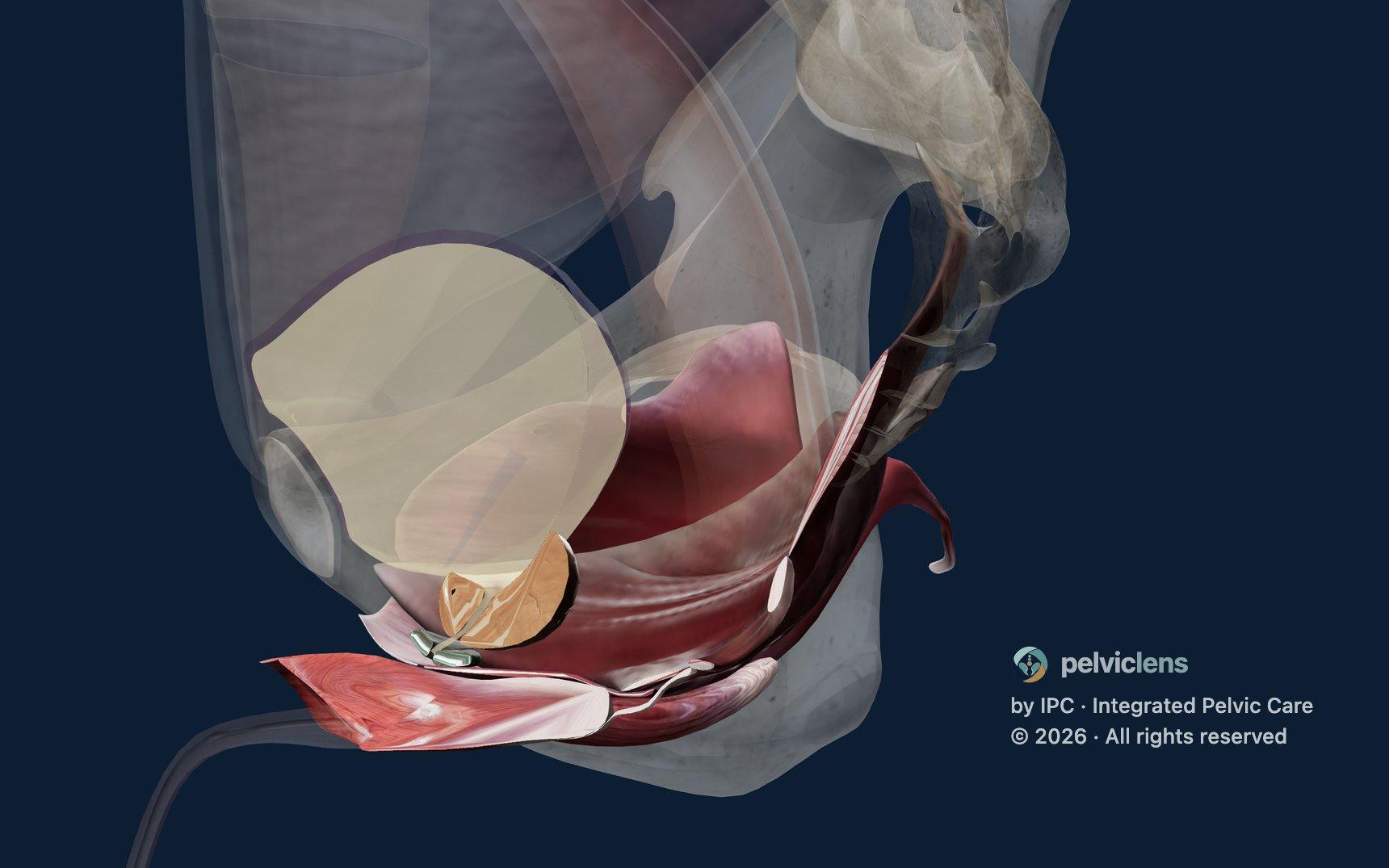 Men’s healthObturator internus trigger pointObturator internus trigger point, charted as a tender point: the pelvic wall muscle, the finding that counts and the work it needs.10 min read
Related articles
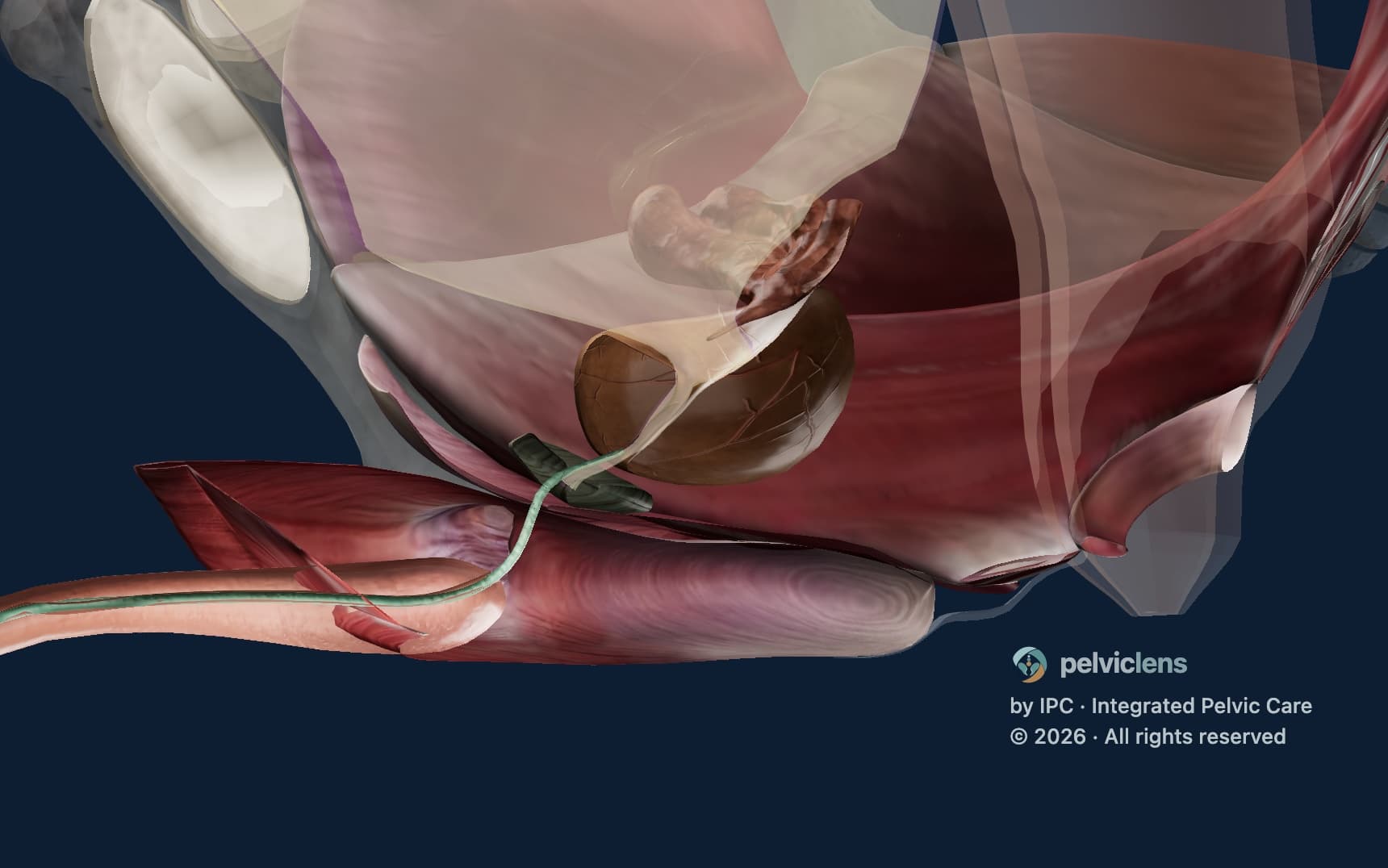 External urethral sphincter: functionThe external urethral sphincter for the pelvic health clinician: how it differs from the internal sphincter, how a cough moves it, and how to train it.10 min read
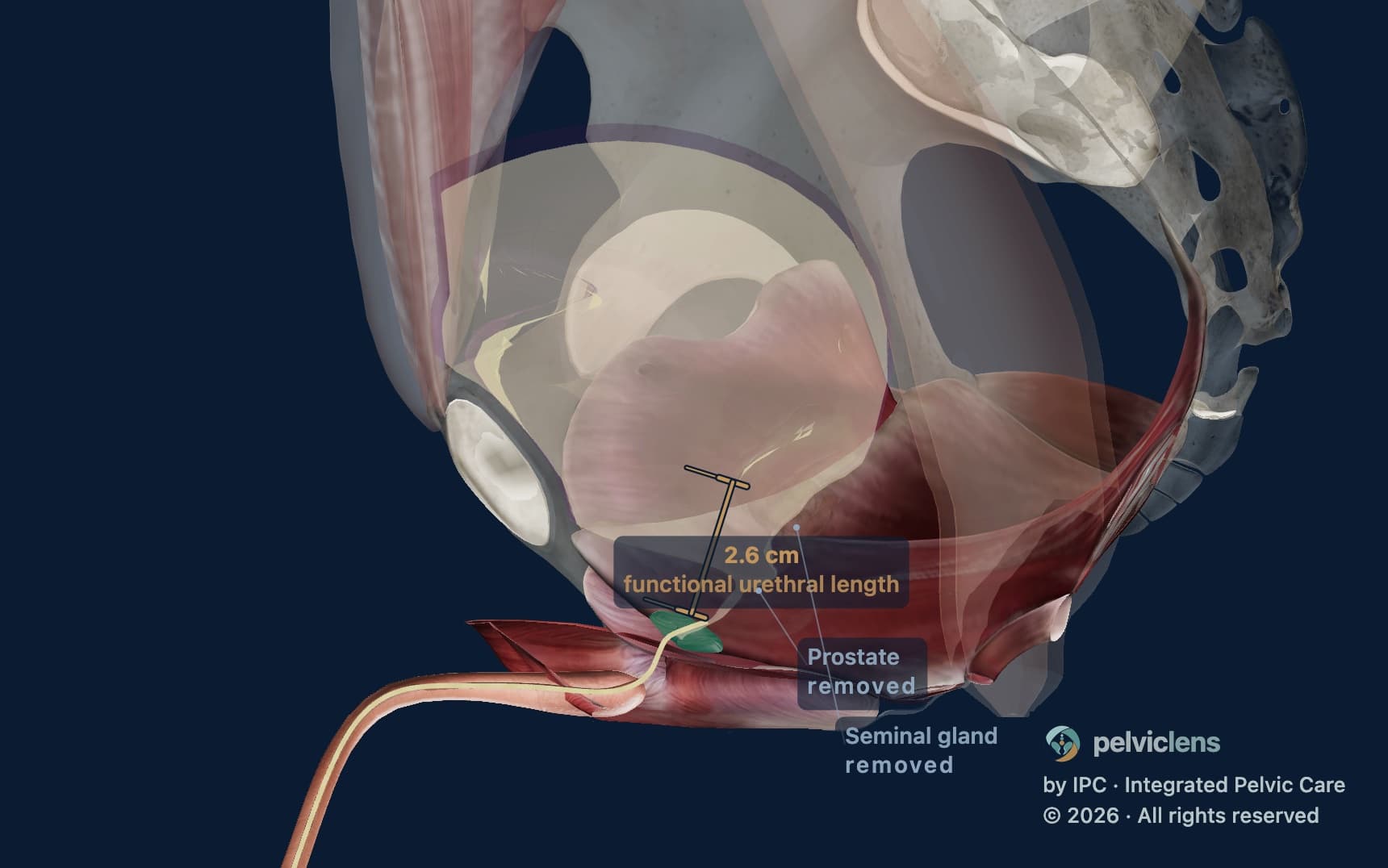 Intrinsic sphincter deficiency (ISD) explainedIntrinsic sphincter deficiency for the pelvic health clinician: why one valve is left after prostatectomy, and the treatment to start first.16 min read
 Cystometrogram: how to read the traceCystometrogram for the pelvic health clinician: the filling curve read as pressure, Pves = Pabd + Pdet, and what to tell your patient.16 min read
Read this article in Français · Español · Português · Deutsch
This article is education for health professionals. It is not medical advice, not a diagnosis and not a treatment plan for any person. Clinical decisions rest on your own assessment of the patient in front of you. If you are a patient reading this, talk it through with your own health professional. Evidence changes: the review date above tells you when this article was last checked.