
All articles
Everything we have published, newest first.
 Sacral neuromodulation (SNM) and PTNSSacral neuromodulation for the pelvic health clinician: the reflex it modulates, who is a candidate, what the test phase shows, and PTNS.10 min read
 Men’s healthMale pelvic floor examination, in orderMale pelvic floor examination for clinicians: consent, observation, palpation and resting anal sphincter tone, each read as a pattern.10 min read
 Pelvic floor biofeedback: what it showsPelvic floor biofeedback for clinicians: what EMG, pressure, ultrasound and the balloon show, what they miss, and where trials back it.17 min read
 Modified Oxford scale: grades and limitsThe modified Oxford scale for clinicians: what a 0 to 5 pelvic floor grade measures, what it misses, and how to read it in men and women.10 min read
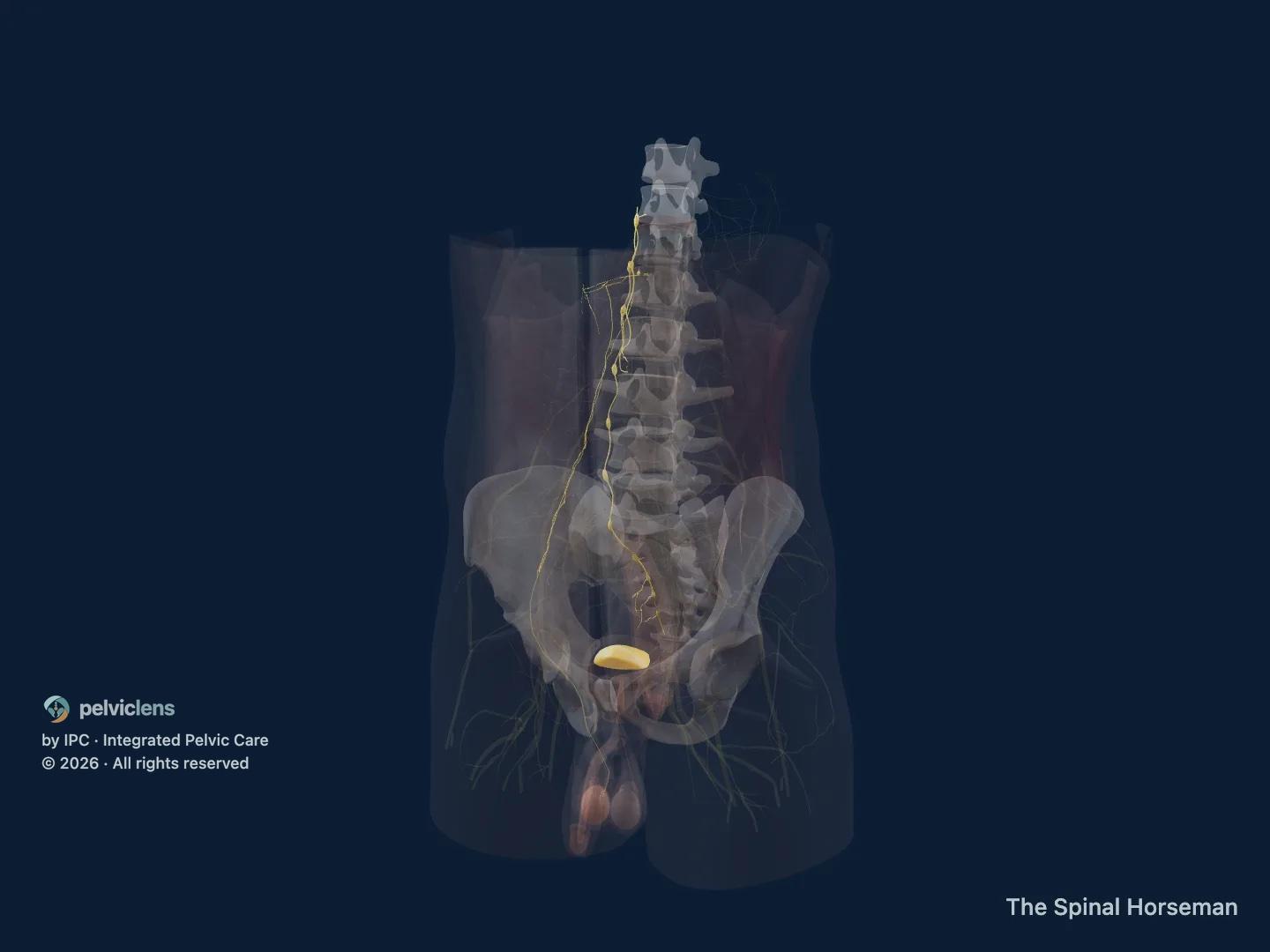 Coccydynia: causes, tests and treatmentCoccydynia for clinicians: dynamic sitting X-rays, the pelvic floor muscles on the coccyx, and the evidence from cushions to coccygectomy.10 min read
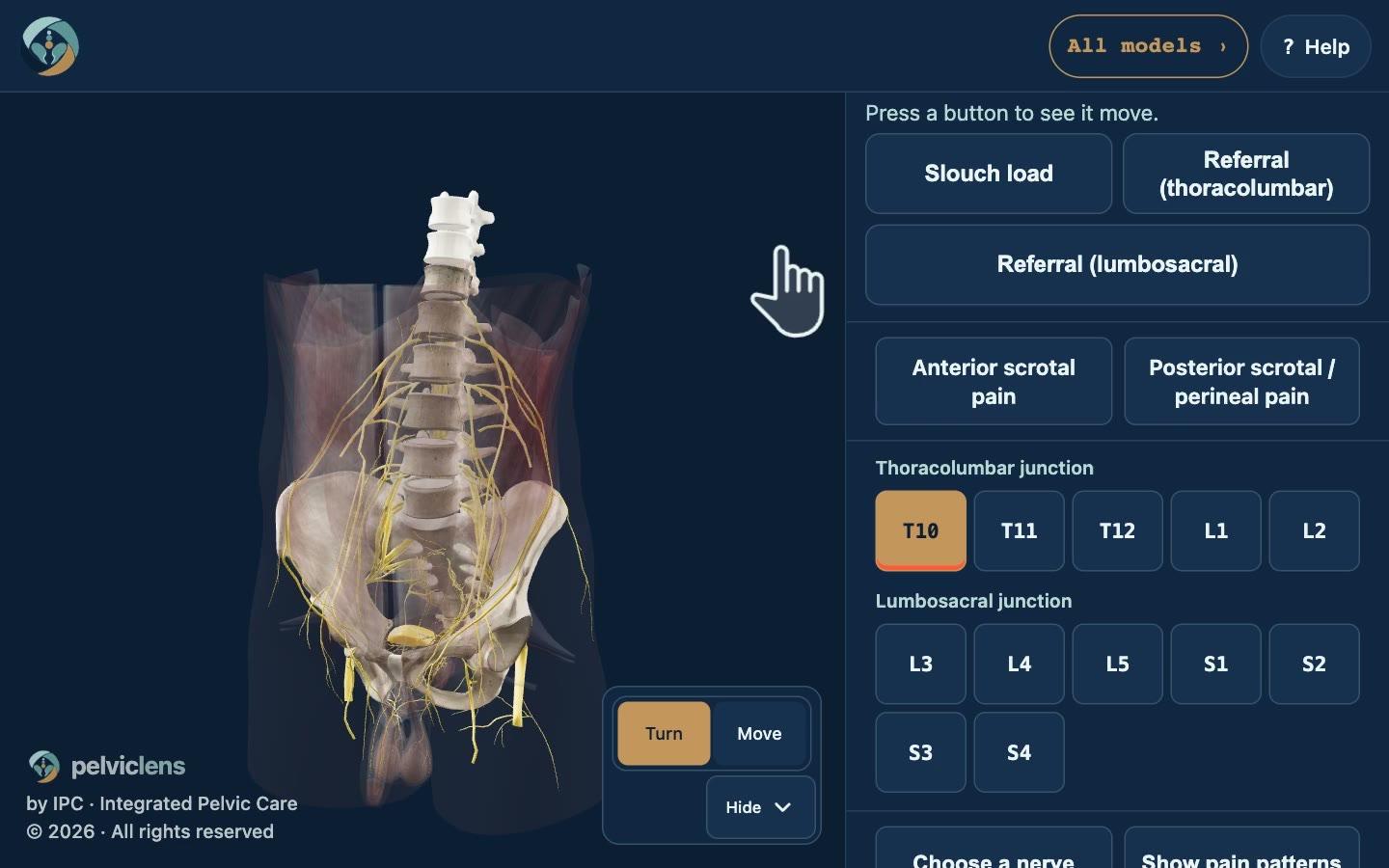 Maigne syndrome: referred pelvic painMaigne syndrome refers T12-L1 pain to the groin, testicle or labia. Test the junction with Maigne's signs and repeated spinal loading.10 min read
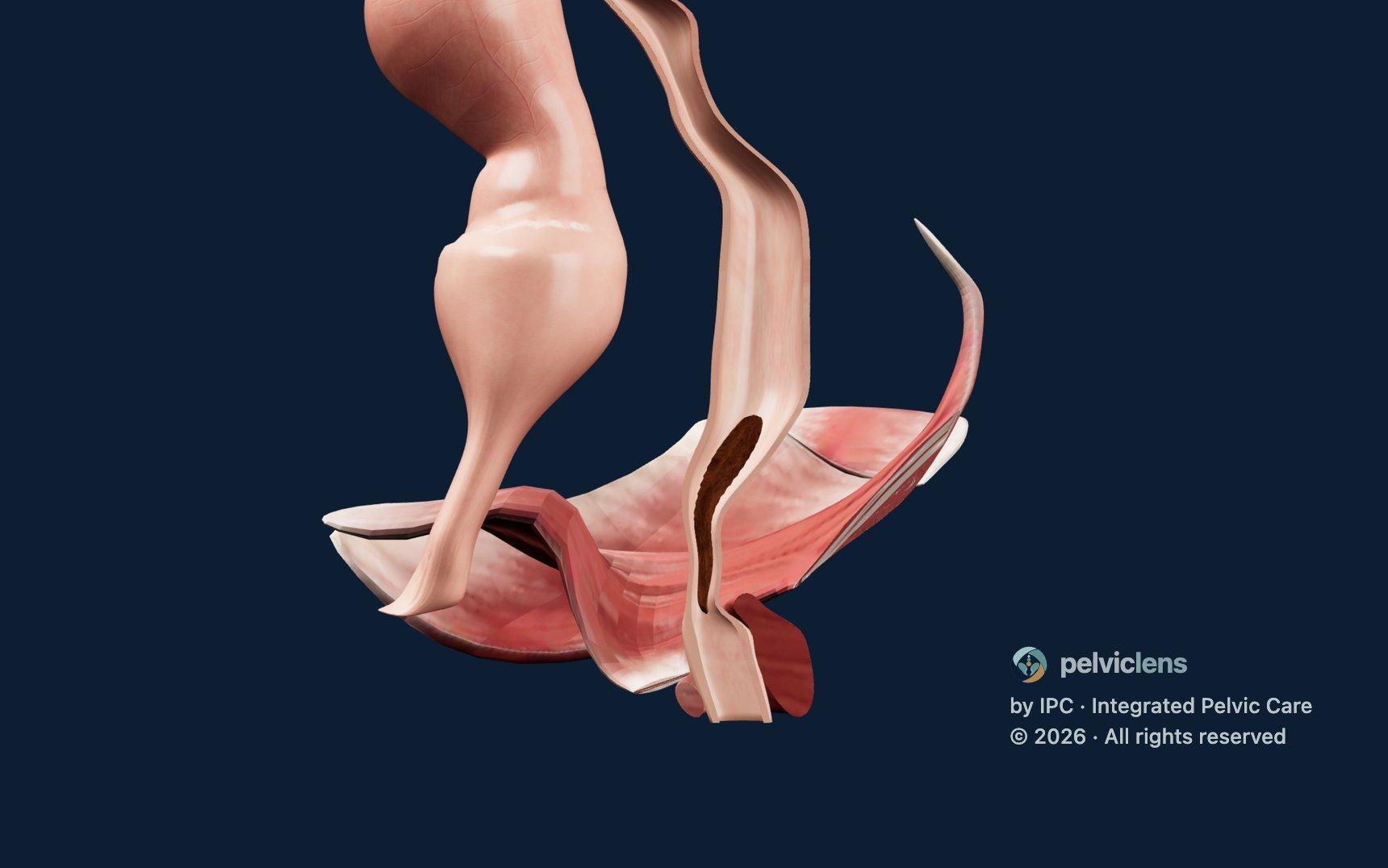 Women’s healthRectocele: mechanism, exam and physioRectocele for pelvic health clinicians: where the push goes, what splinting tells you, and why relaxation comes before strengthening.11 min read
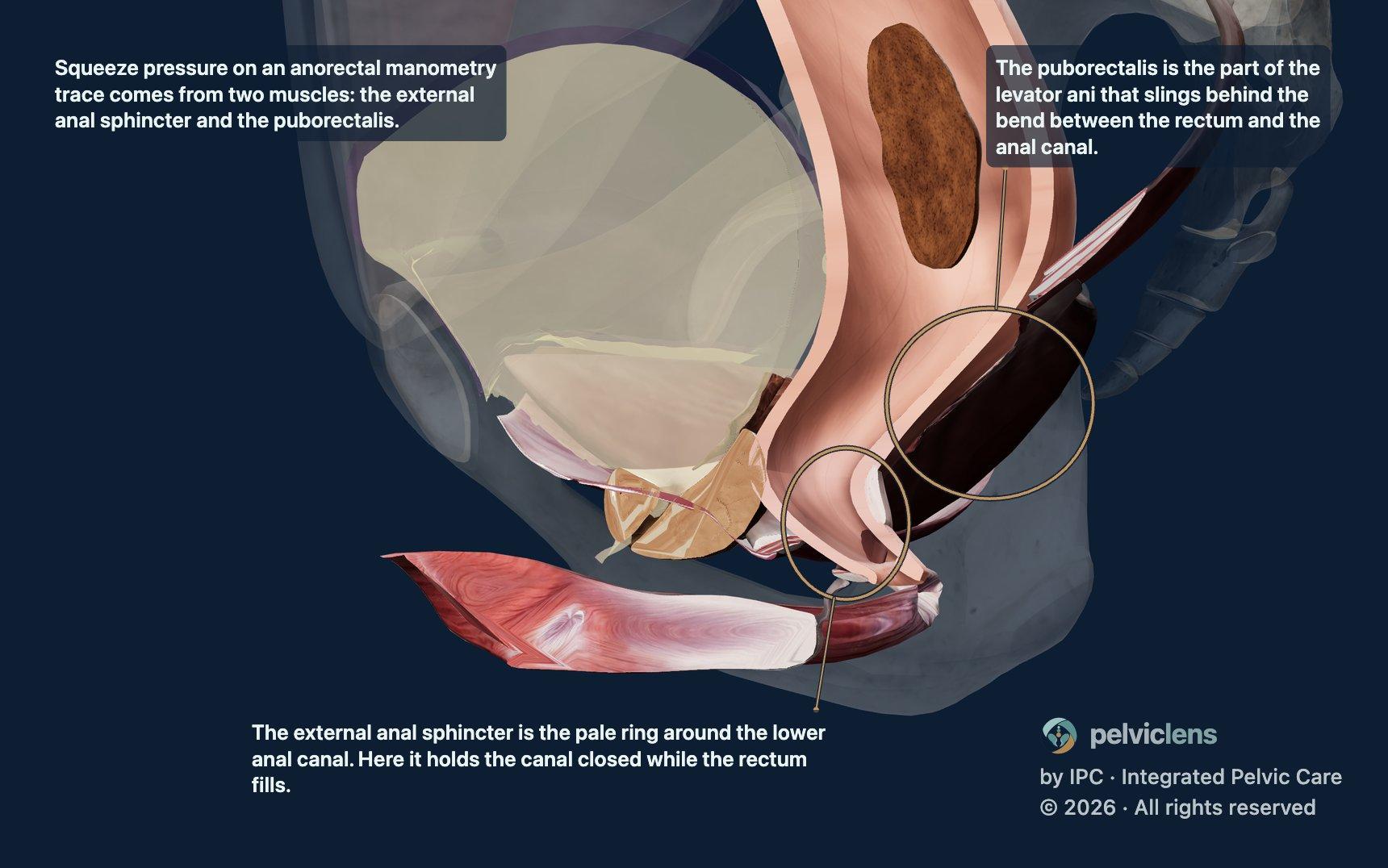 Men’s healthAnorectal manometry: how to read the traceAnorectal manometry read as muscle: resting and squeeze pressure, the reflex, sensation and the push, and what each changes in treatment.12 min read
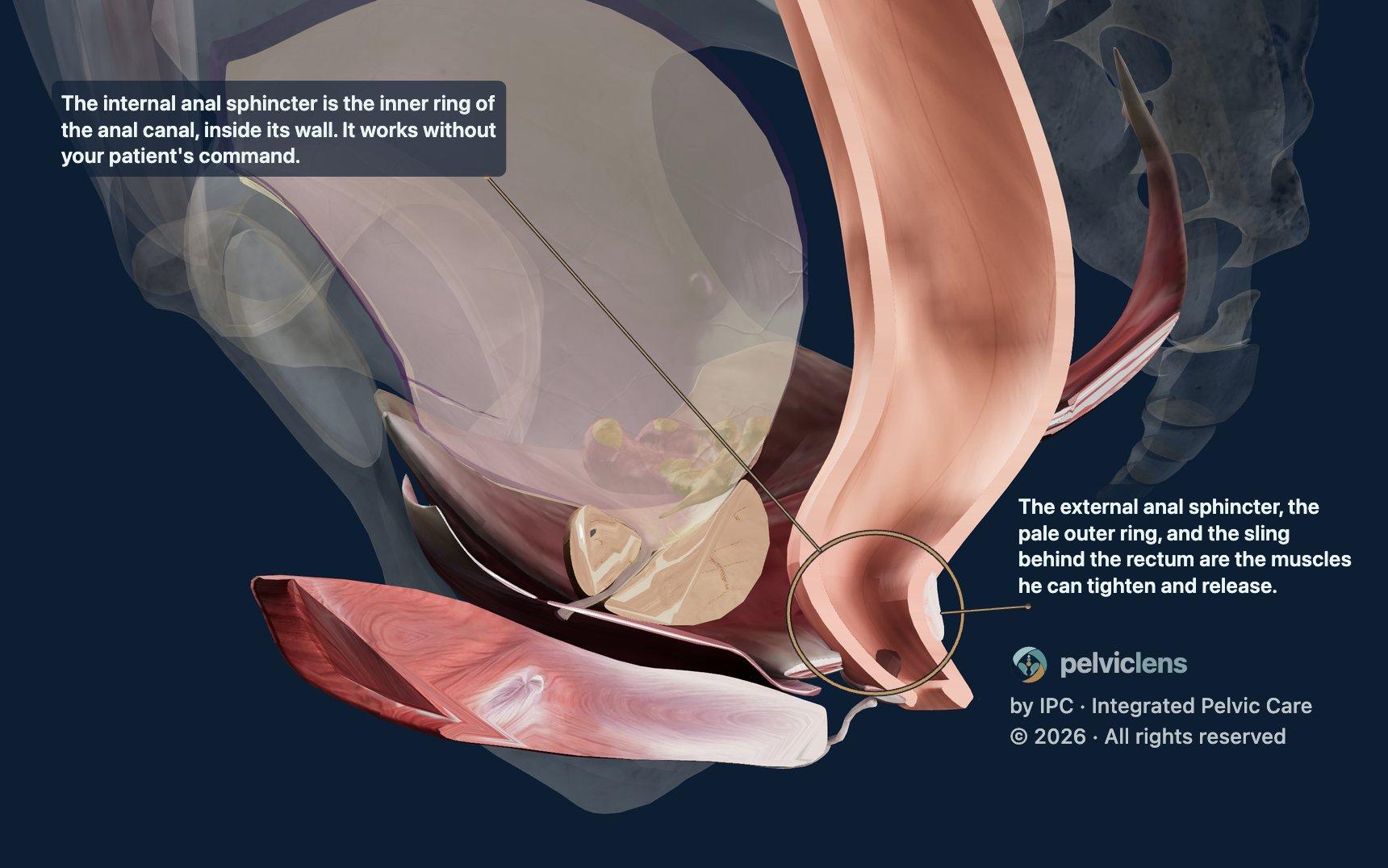 Men’s healthProctalgia fugax: causes and treatmentProctalgia fugax under Rome IV: what the anal sphincter does in an attack, what shortens it, and how levator ani syndrome differs.11 min read
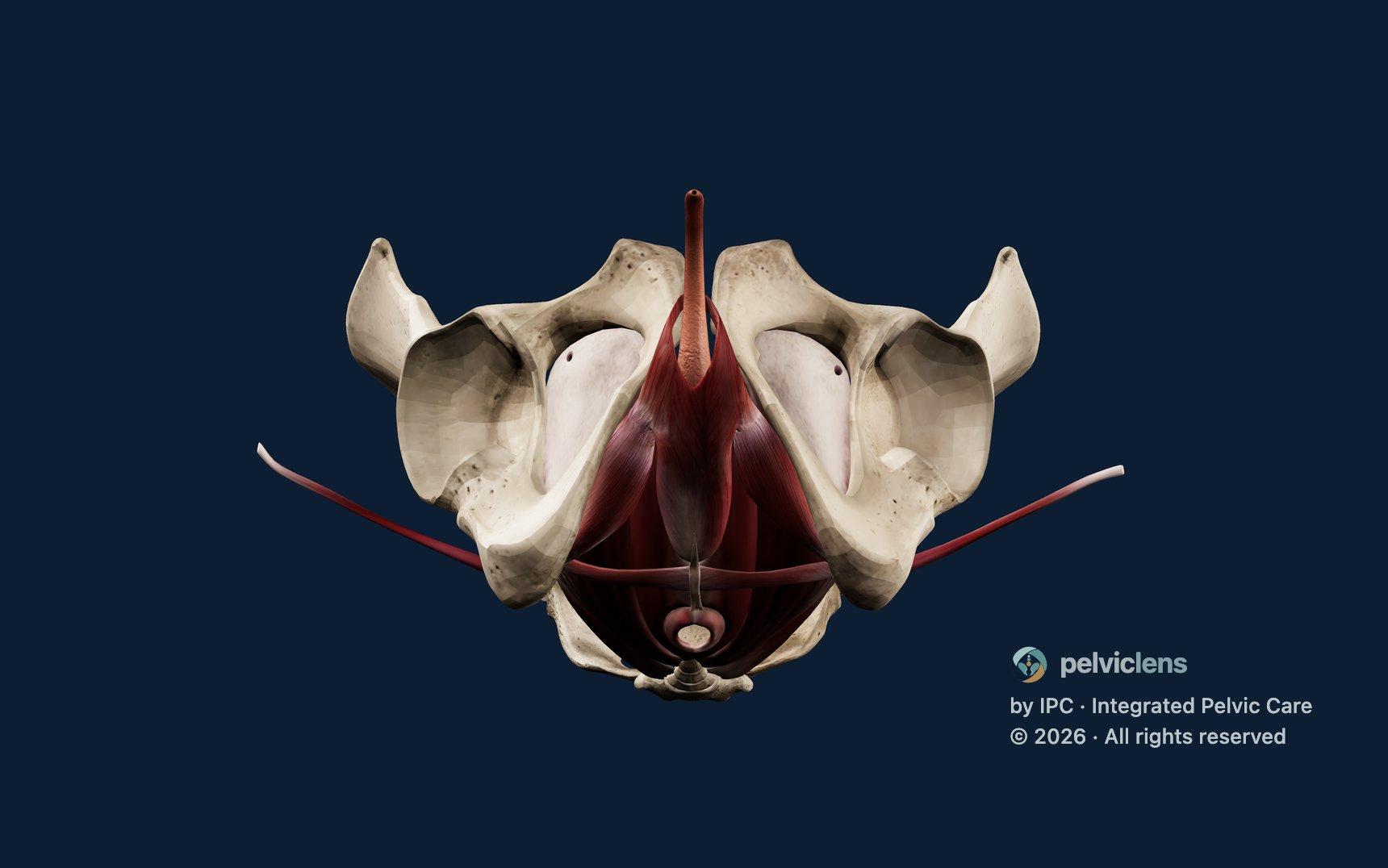 Men’s healthMale pelvic floor anatomy: the three layersMale pelvic floor anatomy for clinicians: three muscle layers, the two sphincters, the pelvic wall and the pudendal supply, in exam order.17 min read
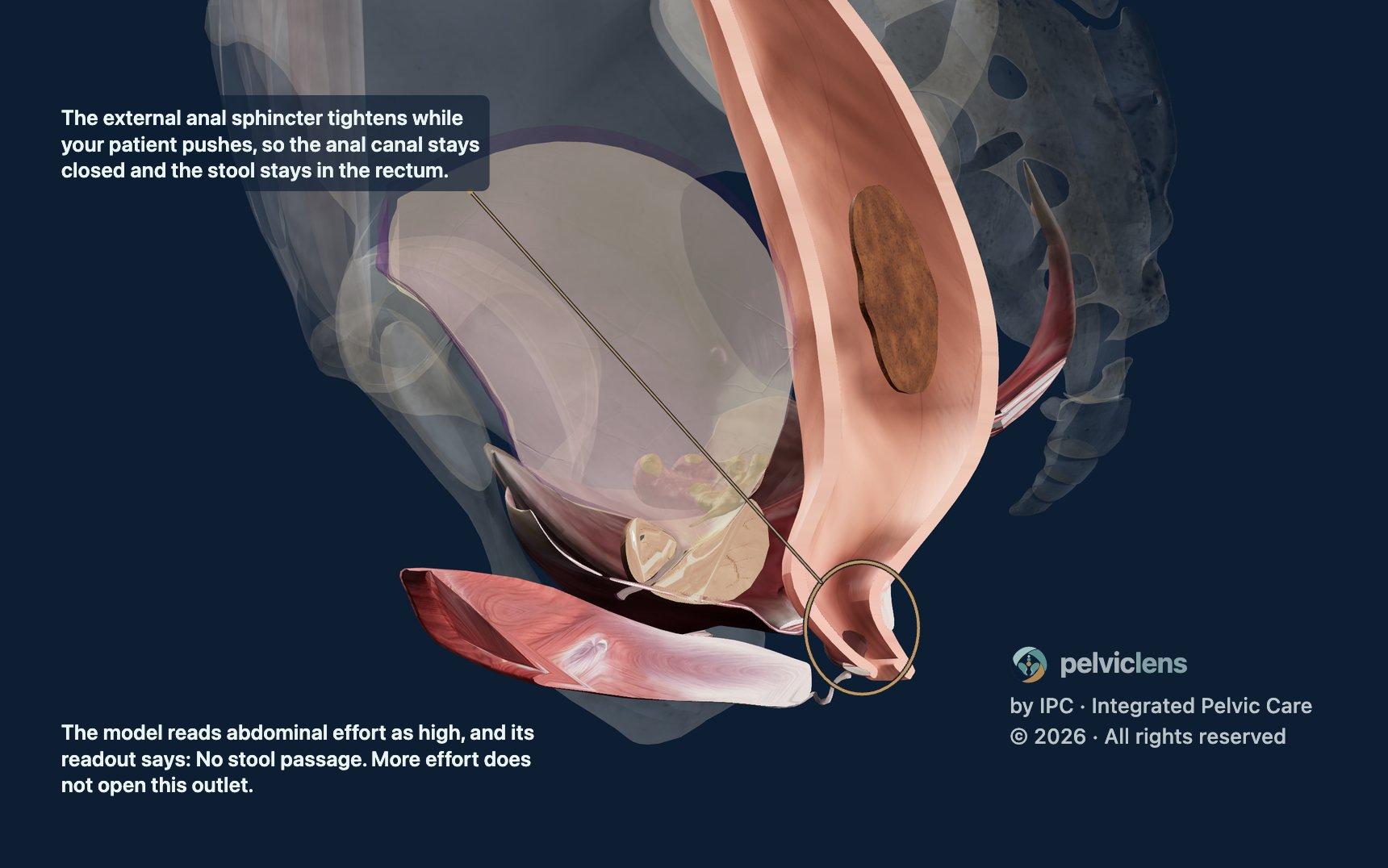 Men’s healthDyssynergic defecation (anismus) in menDyssynergic defecation in men: what manometry, the balloon test and defecography show, and the exam cue that decides the treatment.11 min read
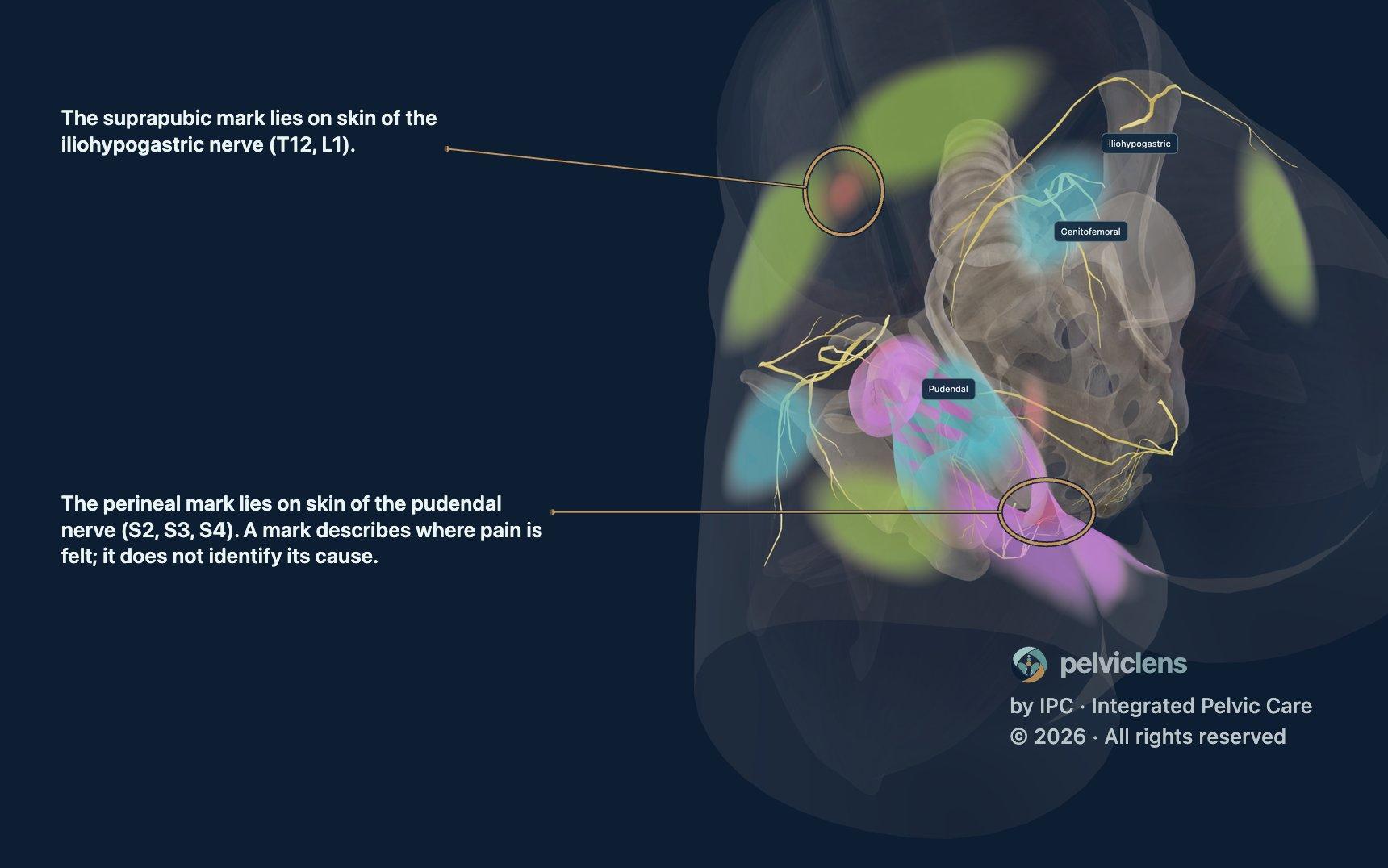 Men’s healthChronic pelvic pain syndrome in menChronic pelvic pain syndrome in men, long called chronic prostatitis: sort it by the Four Horsemen, then by the pelvic floor pattern.10 min read
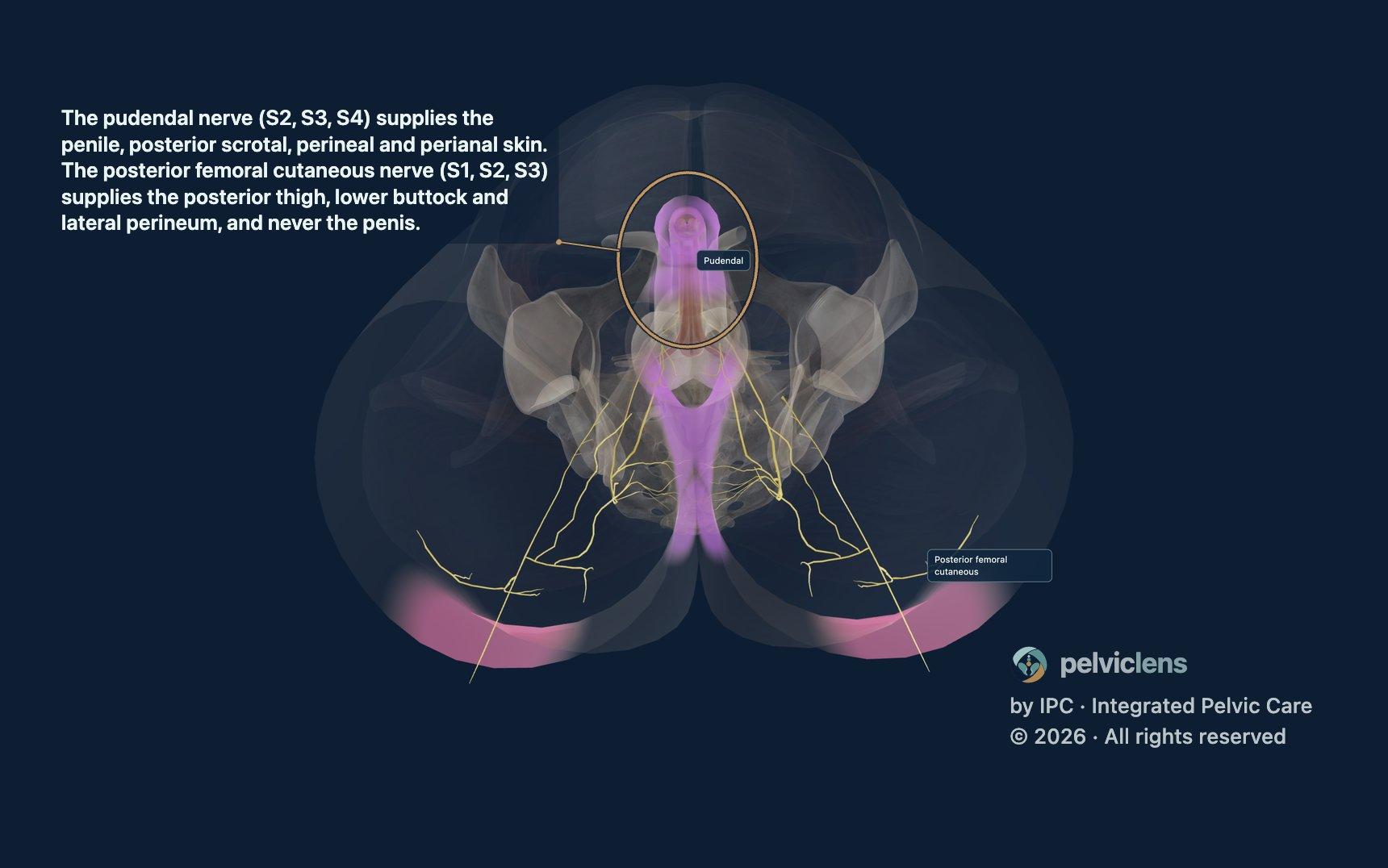 Men’s healthPudendal neuralgia: criteria and testsPudendal neuralgia in men: the Nantes criteria, the P slump test and the pudendal nerve tests, from EMG to the CT-guided block, read by Four Horsemen.10 min read
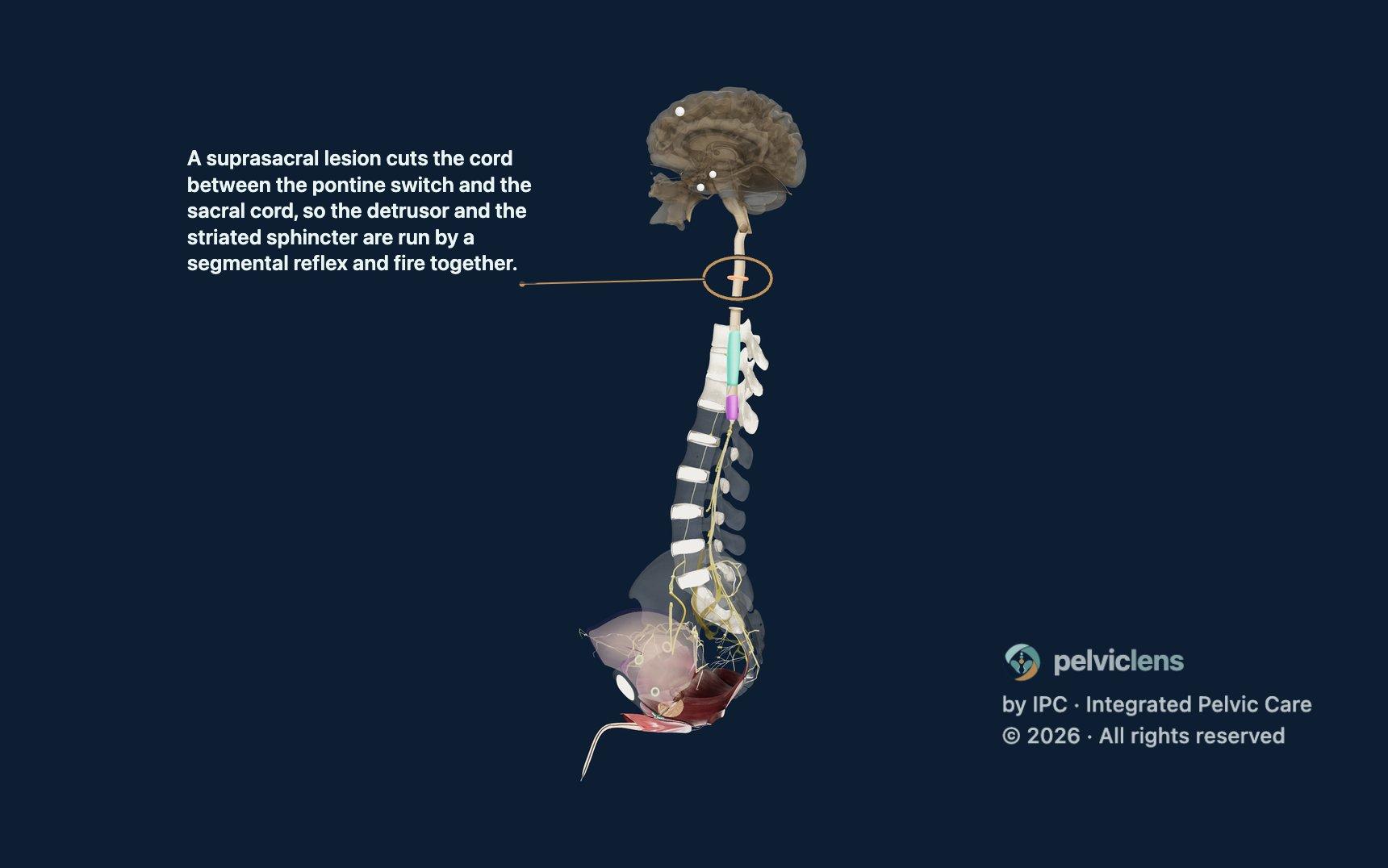 Detrusor sphincter dyssynergia (DSD)Detrusor sphincter dyssynergia on the nerve model: the suprasacral lesion, the voiding trace, and when it is dysfunctional voiding.11 min read
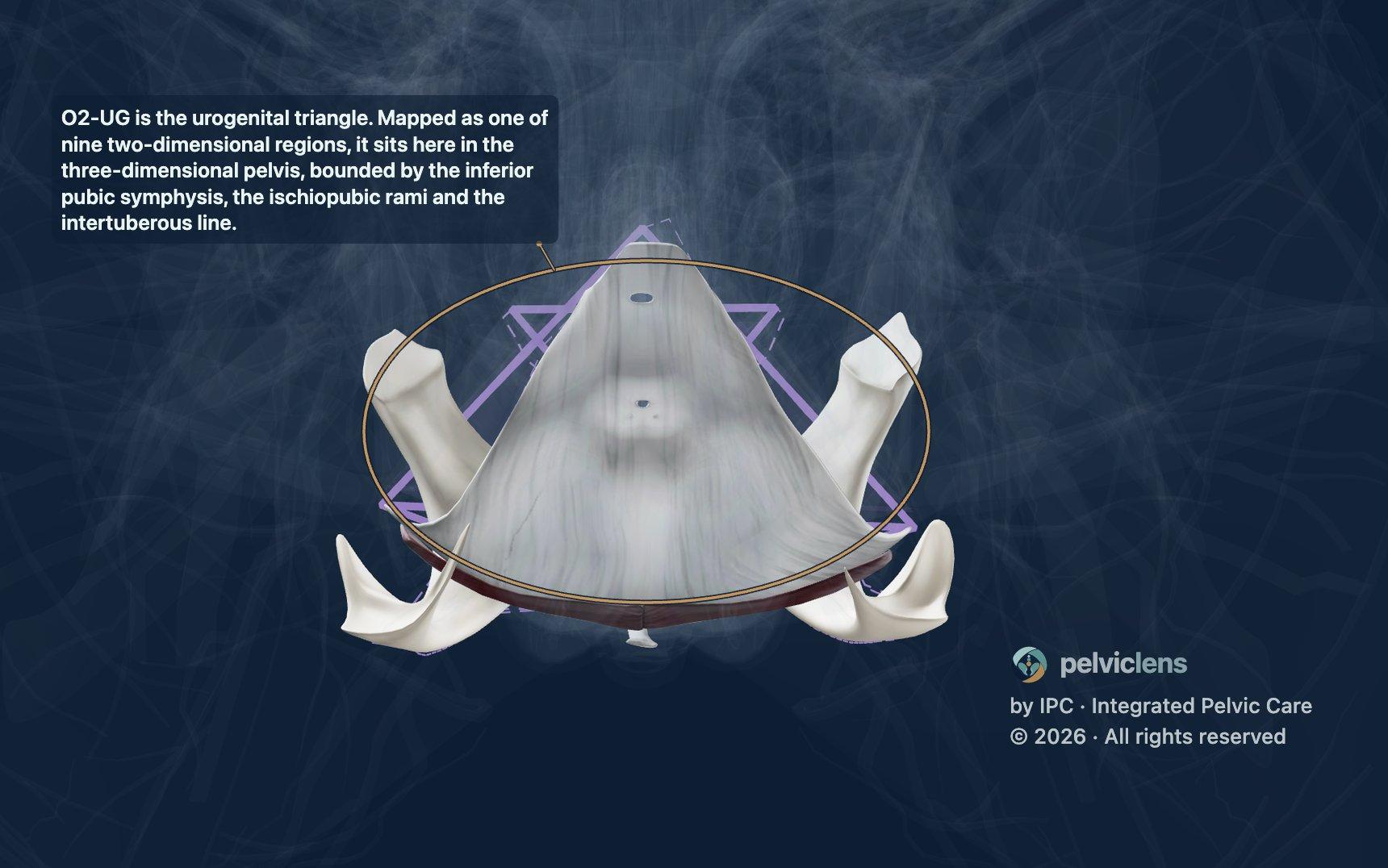 Men’s healthPelvic floor courses for physiotherapistsPelvic floor courses for physiotherapists: what to check before booking, what a 3D model adds, and where to learn male pelvic health.16 min read
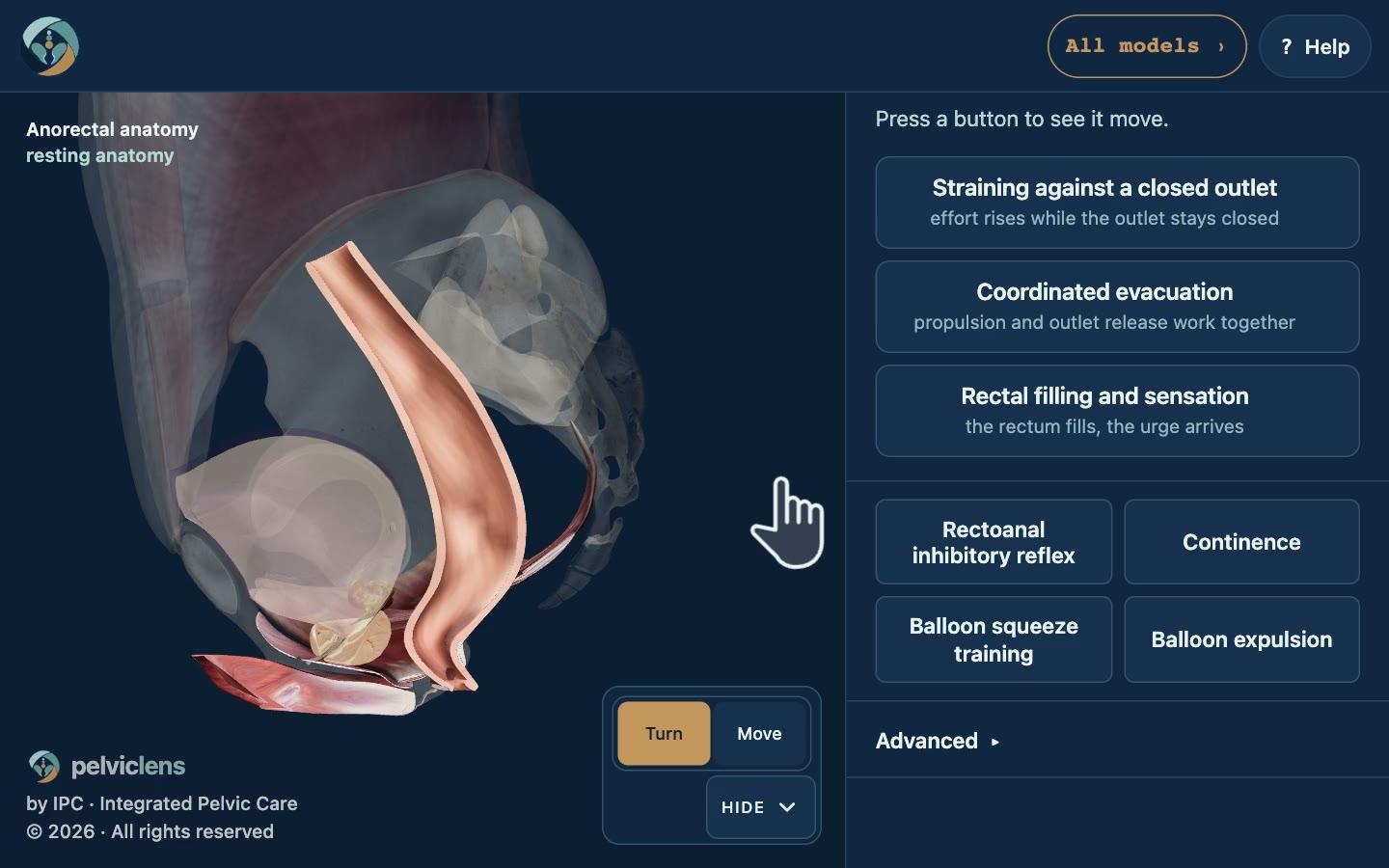
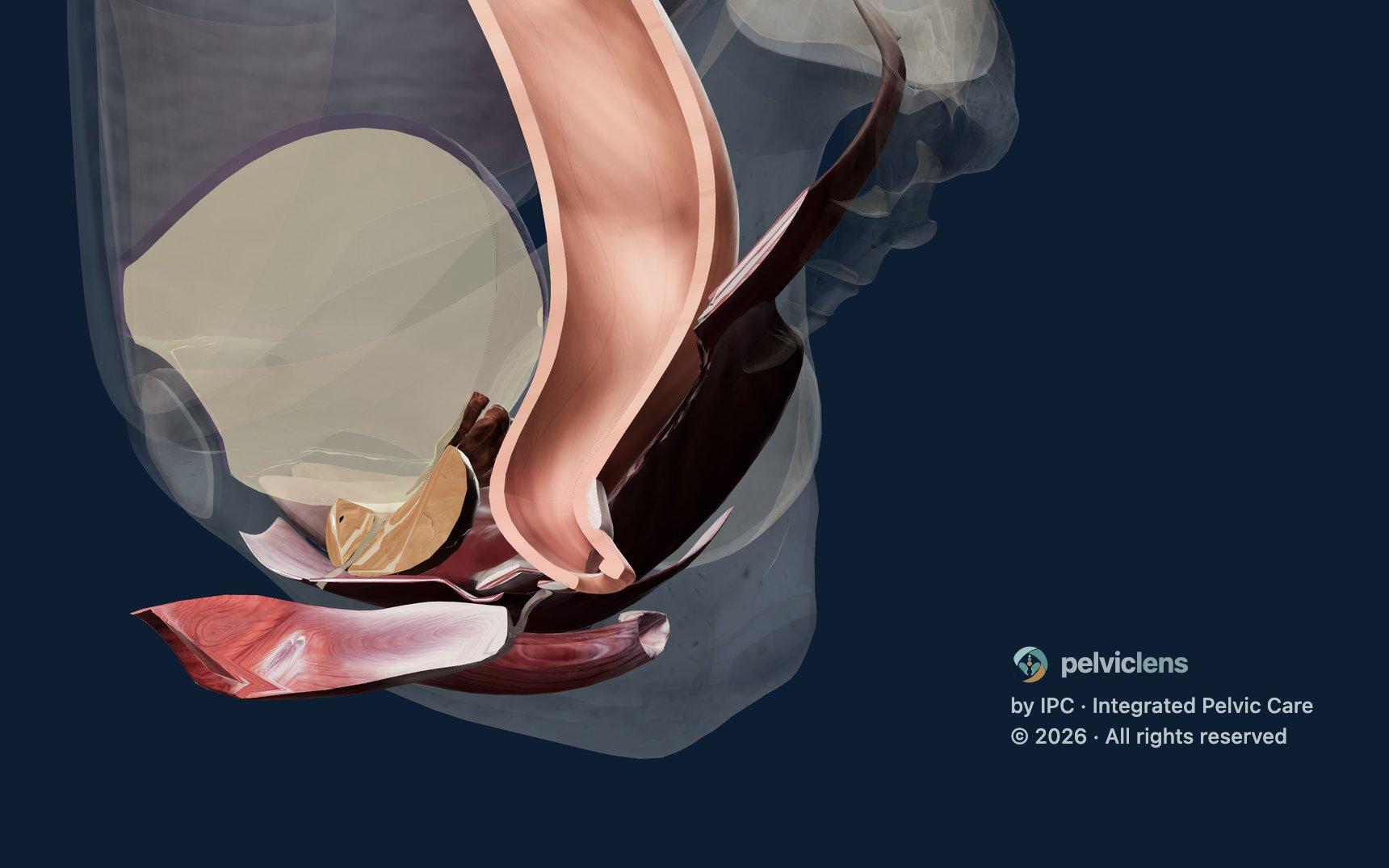 Men’s healthAnorectal angle: normal range in menNormal anorectal angle: about 85 to 96° at rest, sharper on a squeeze, wider on straining, and the exam cue that splits Guarding from Restriction.18 min read
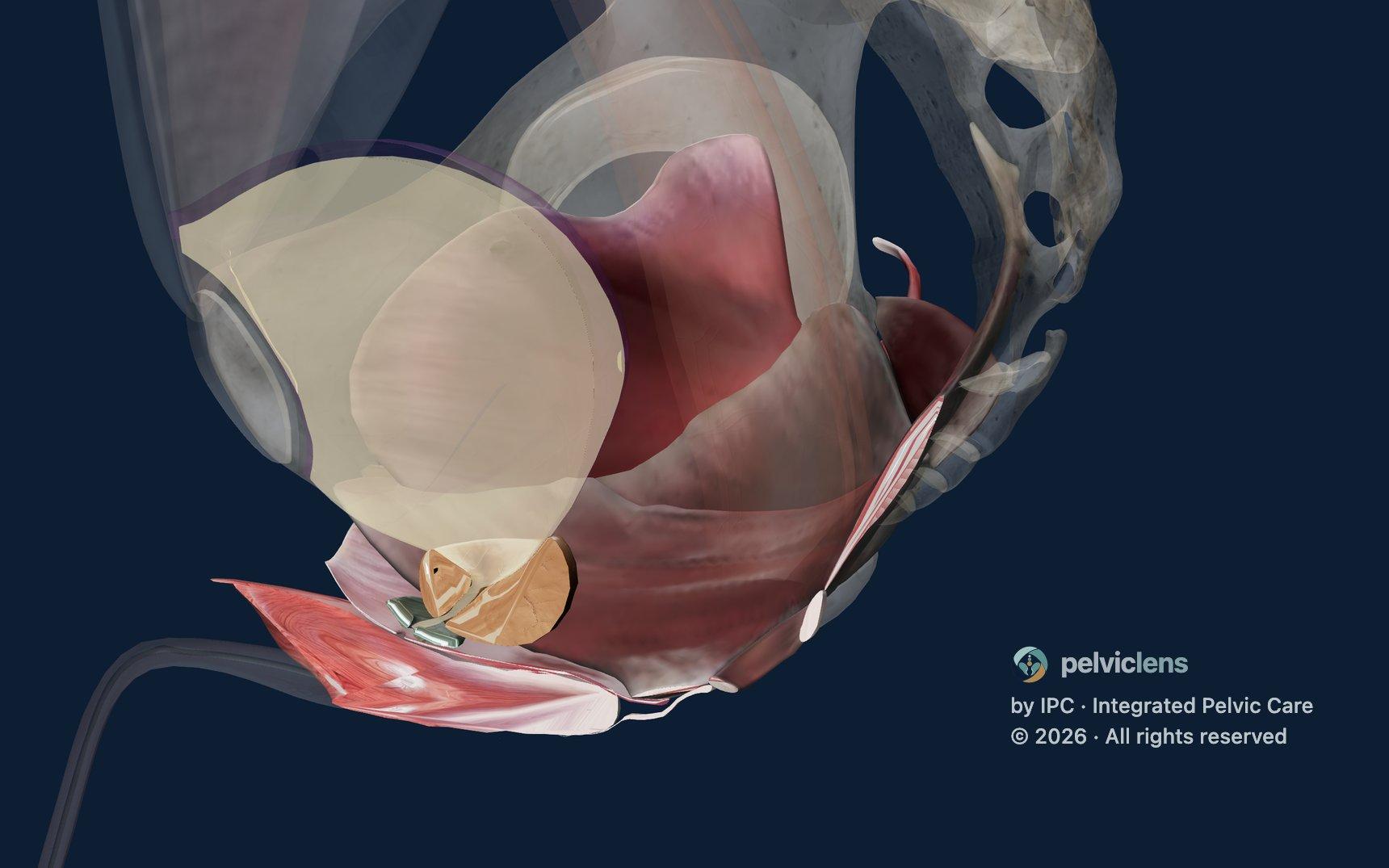 Men’s healthPelvic floor downtraining in menHypertonic pelvic floor in men is a label, not a finding: pelvic floor downtraining is down-regulation for the Guarding pattern the exam finds.17 min read
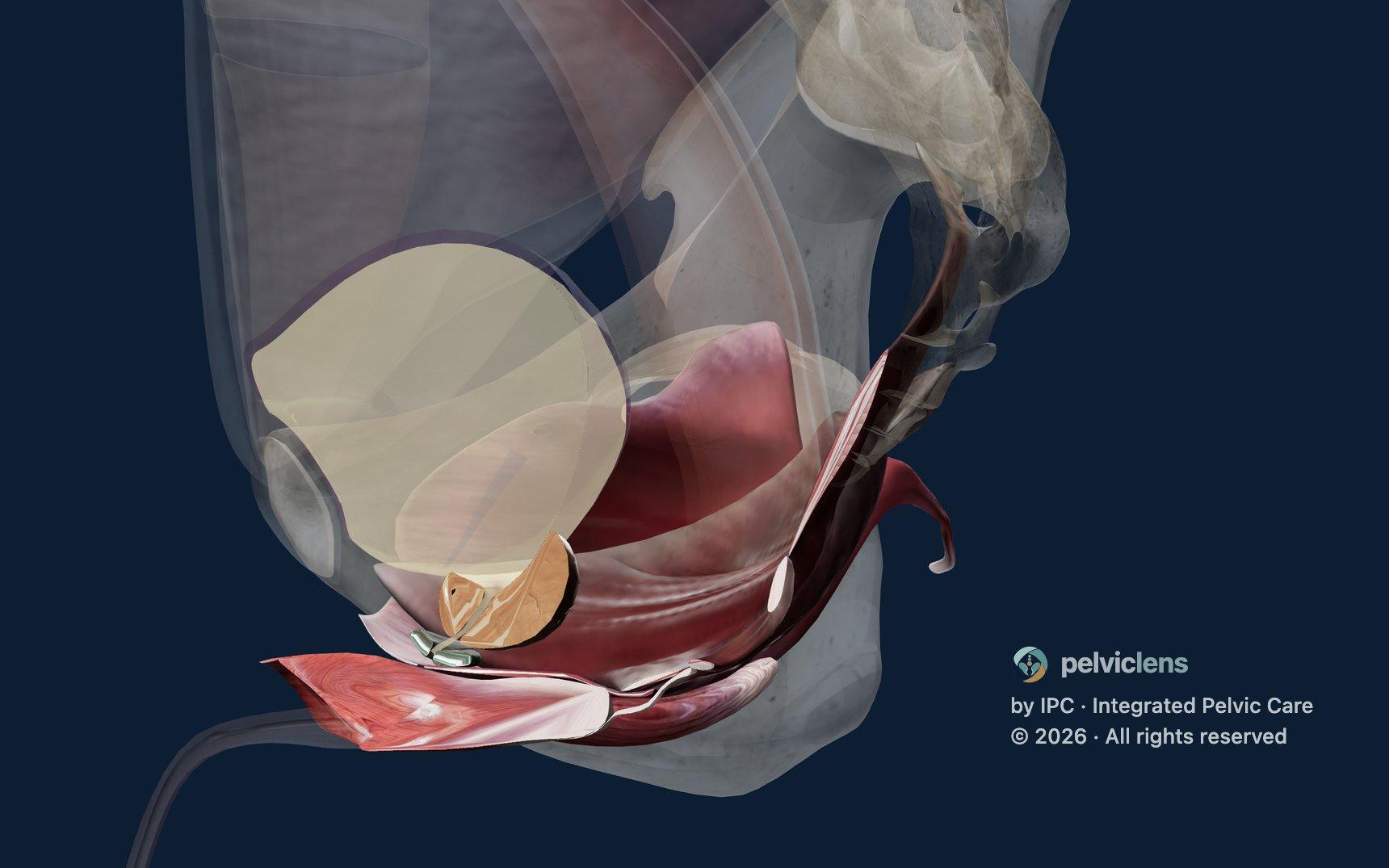 Men’s healthObturator internus trigger pointObturator internus trigger point, charted as a tender point: the pelvic wall muscle, the finding that counts and the work it needs.10 min read
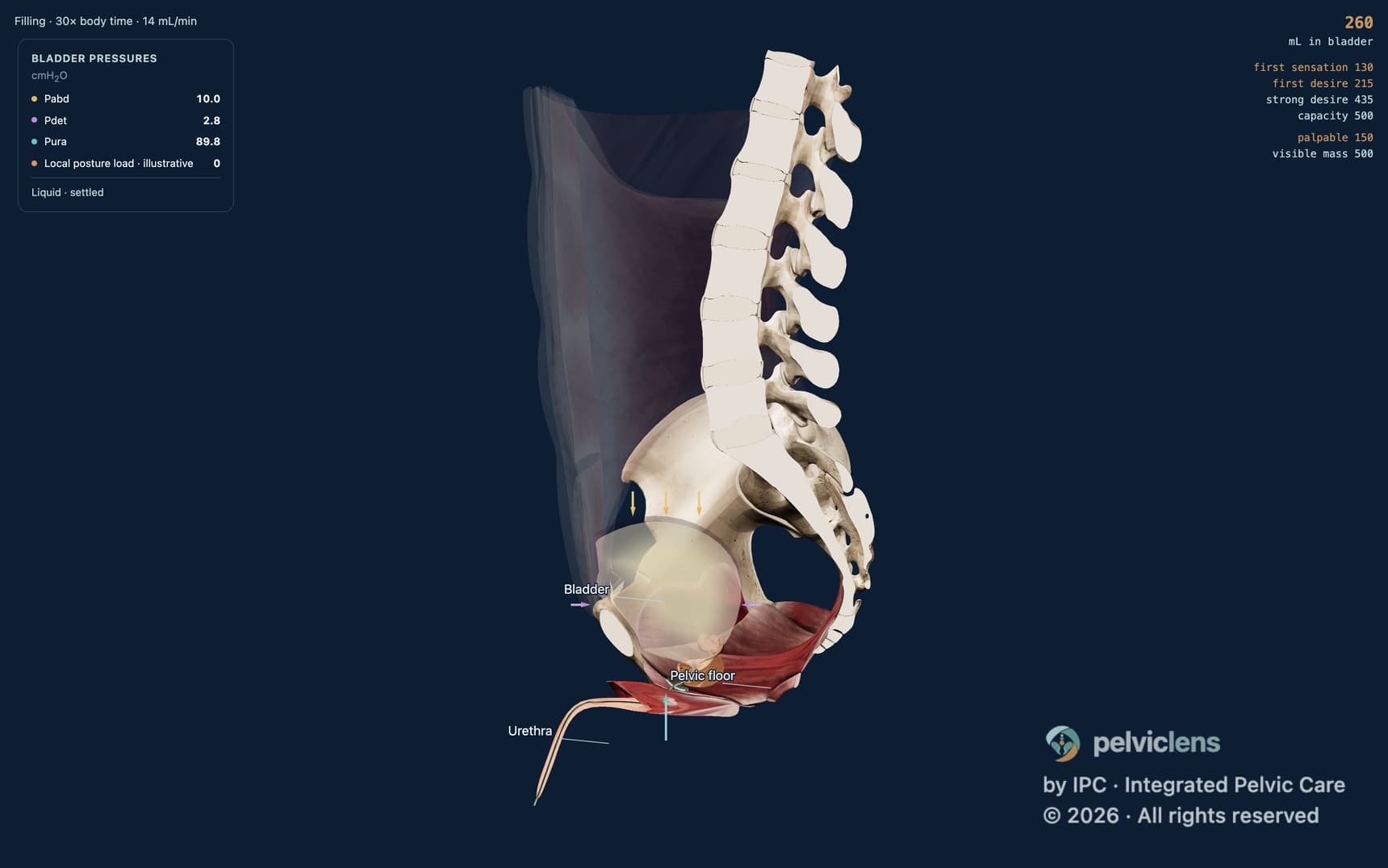 Cystometrogram: how to read the traceCystometrogram for the pelvic health clinician: the filling curve read as pressure, Pves = Pabd + Pdet, and what to tell your patient.16 min read
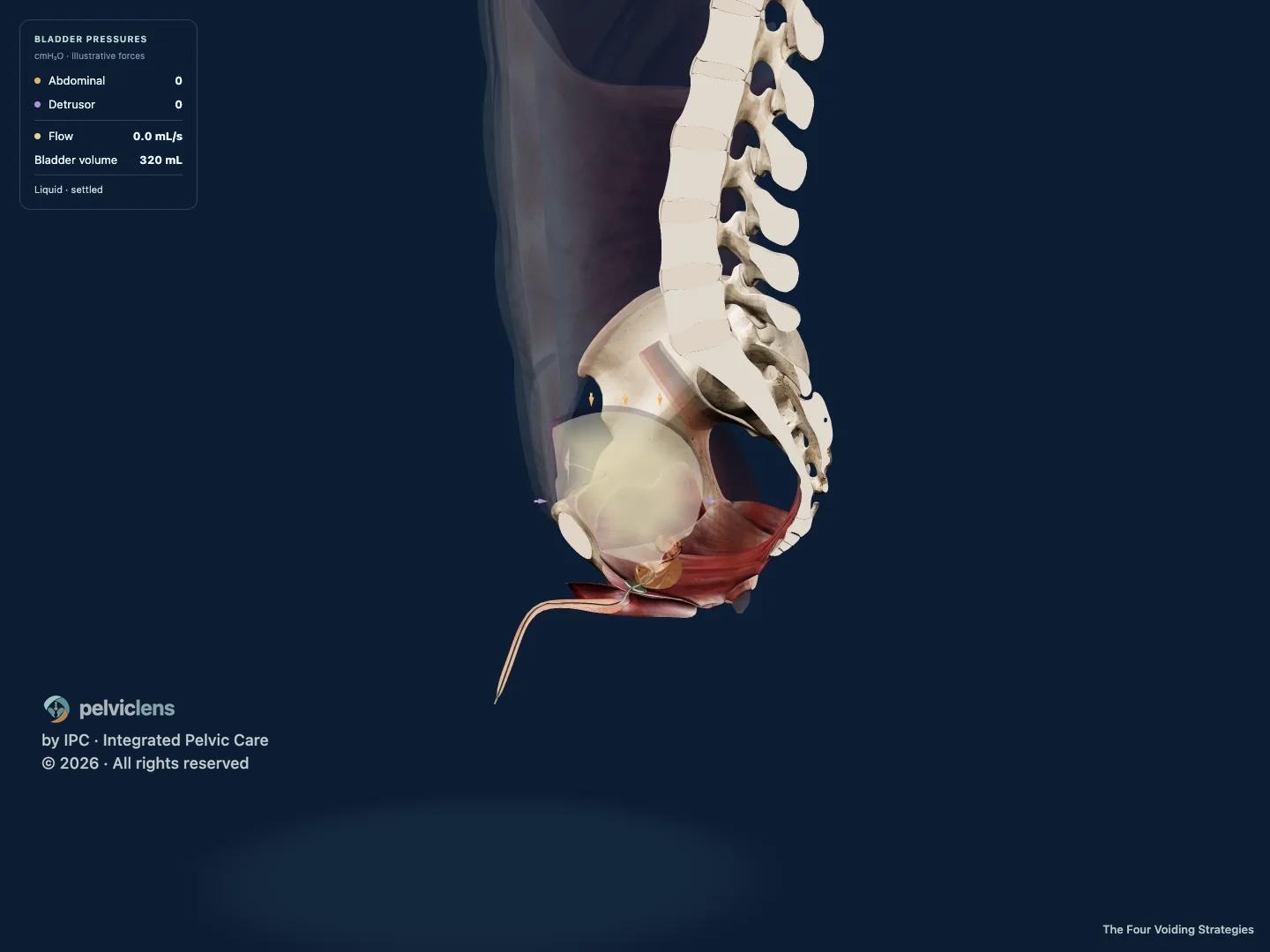
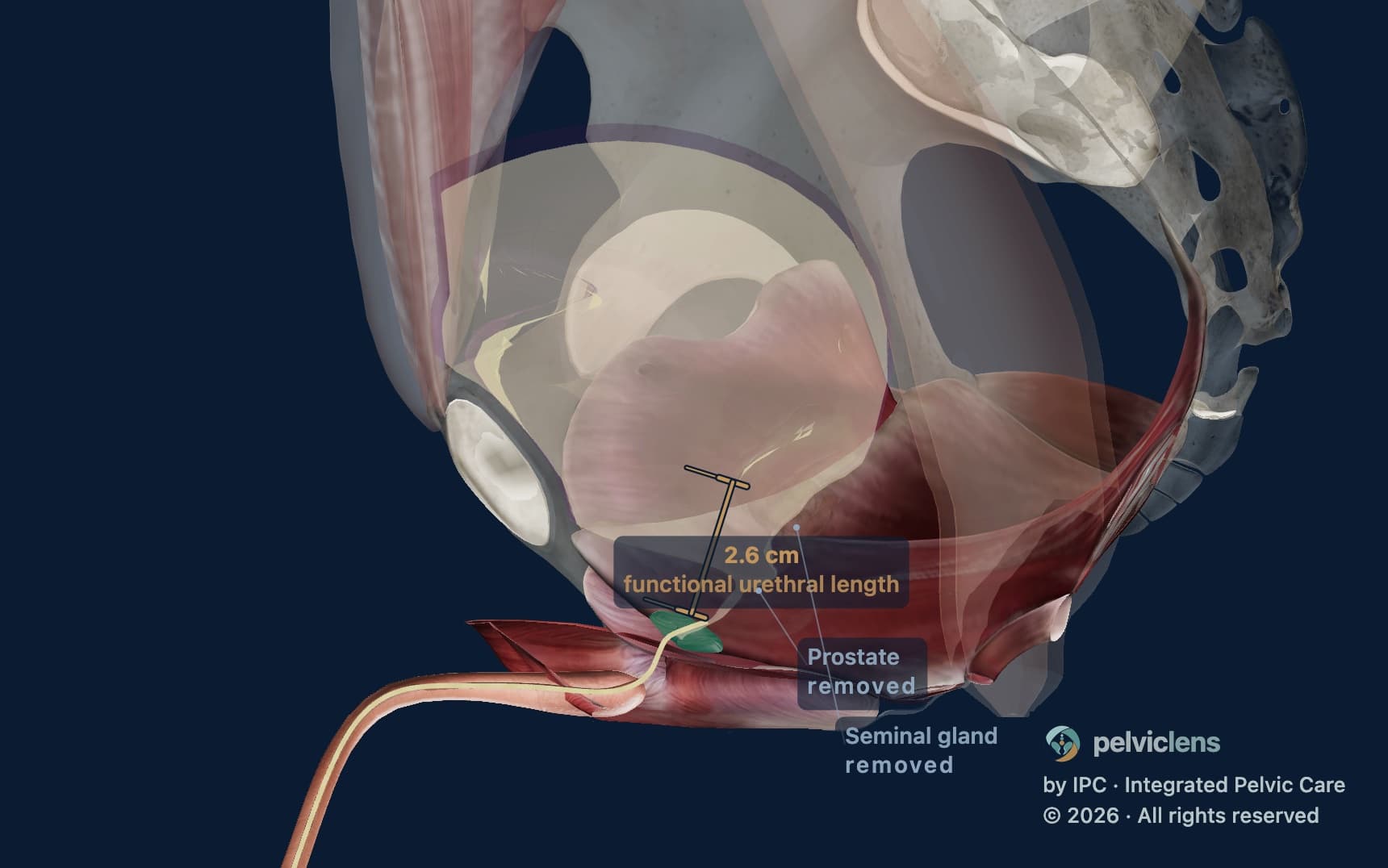 Intrinsic sphincter deficiency (ISD) explainedIntrinsic sphincter deficiency for the pelvic health clinician: why one valve is left after prostatectomy, and the treatment to start first.16 min read
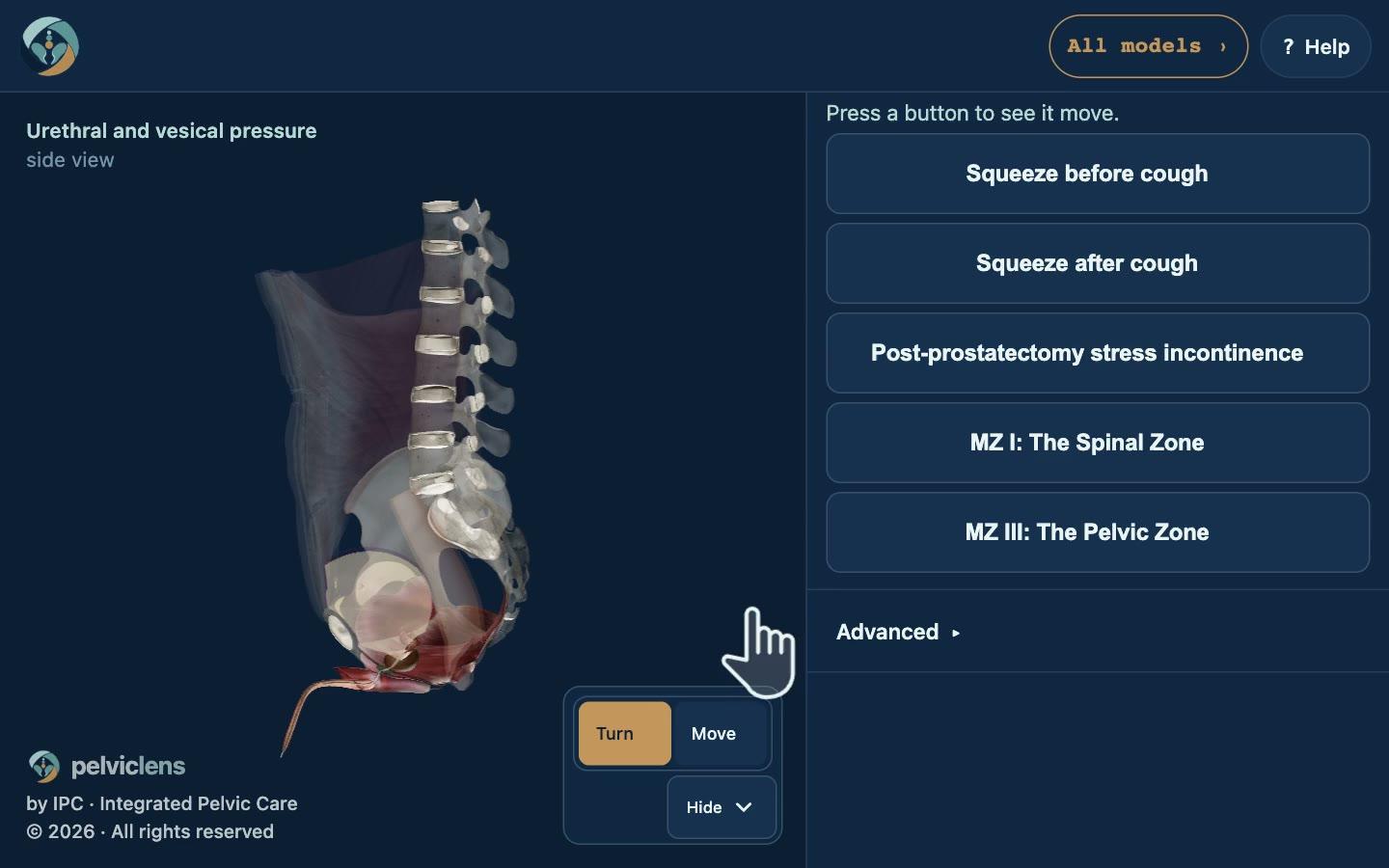
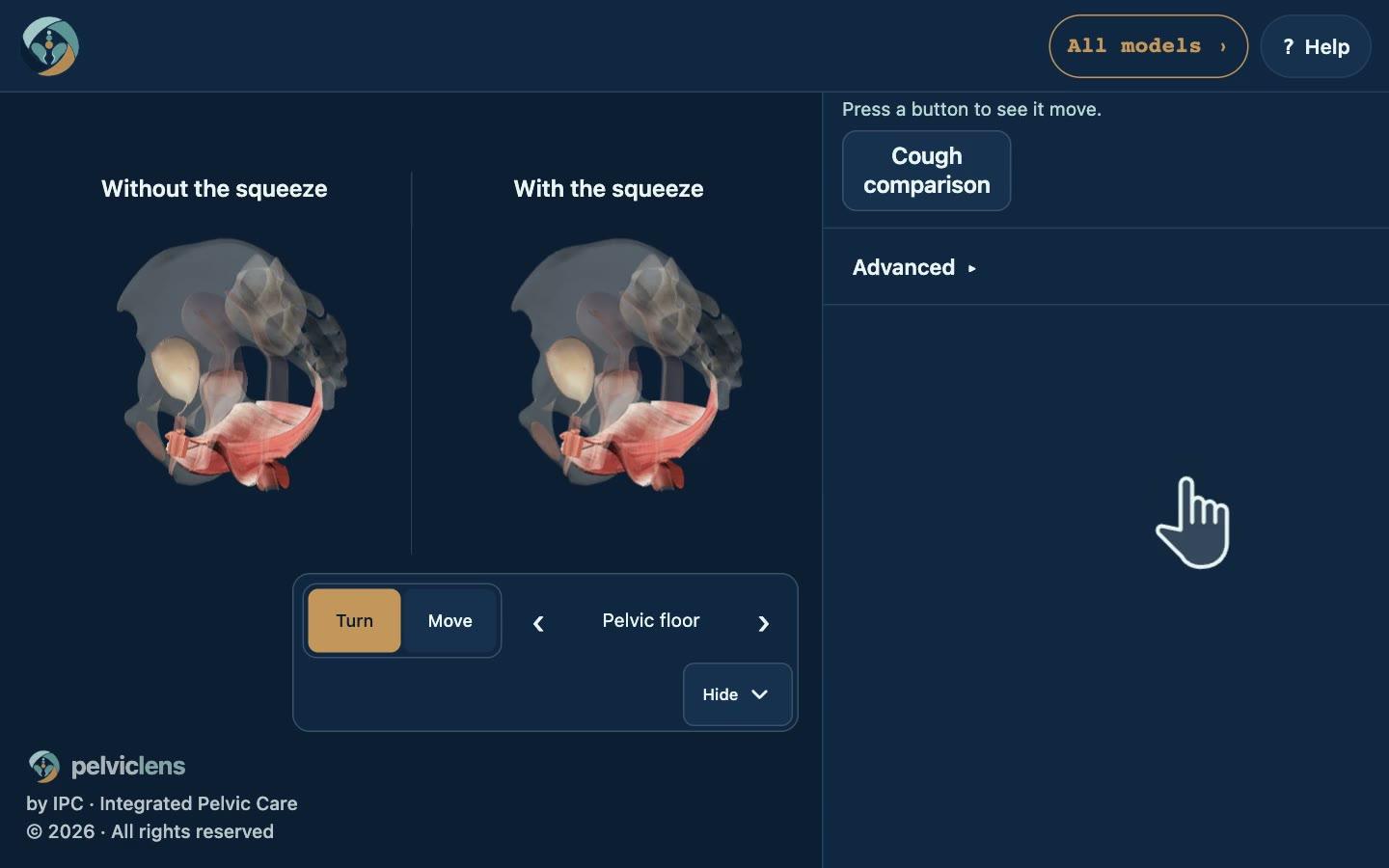
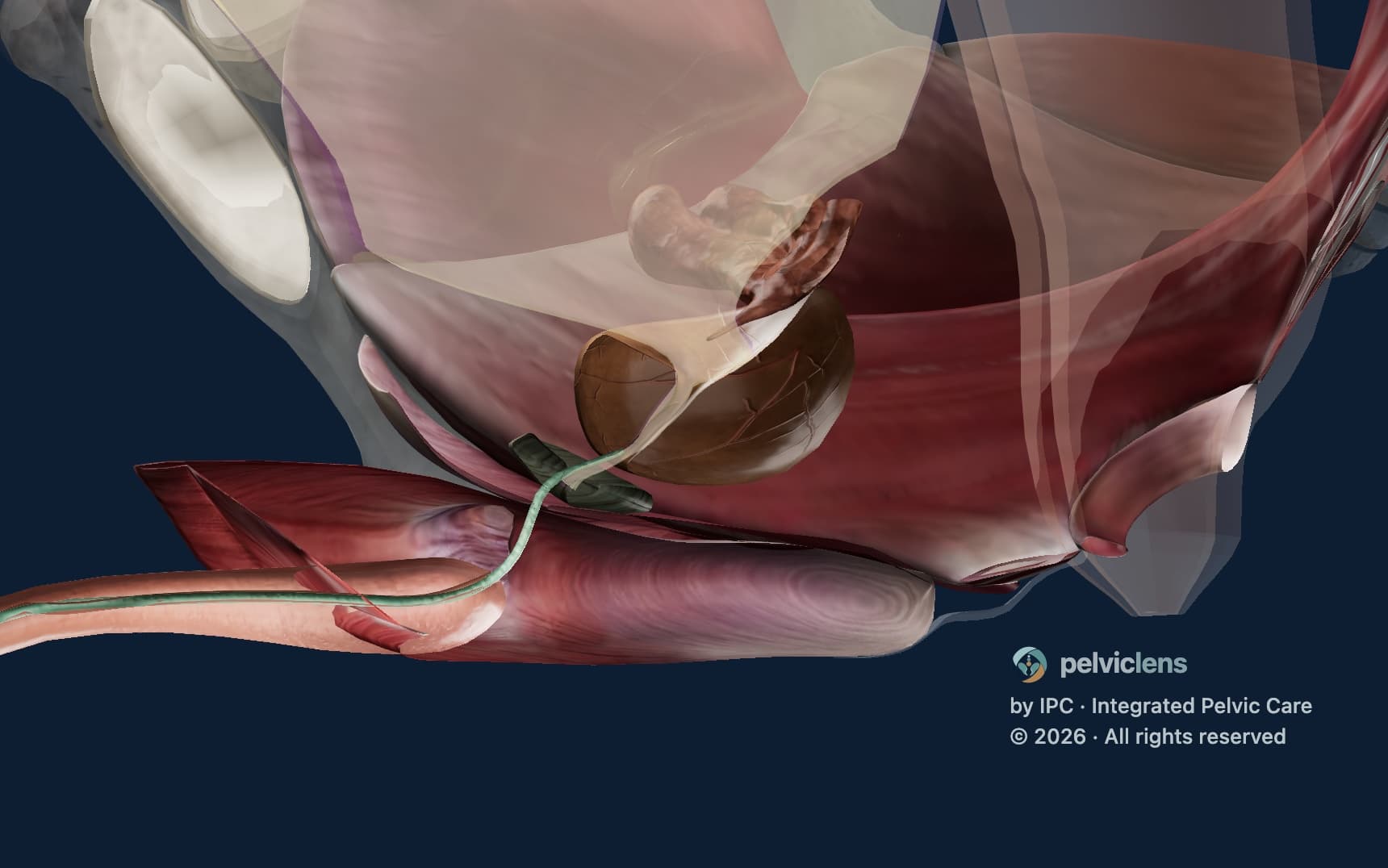 External urethral sphincter: functionThe external urethral sphincter for the pelvic health clinician: how it differs from the internal sphincter, how a cough moves it, and how to train it.10 min read